Great Gate of the Tomis Fortress
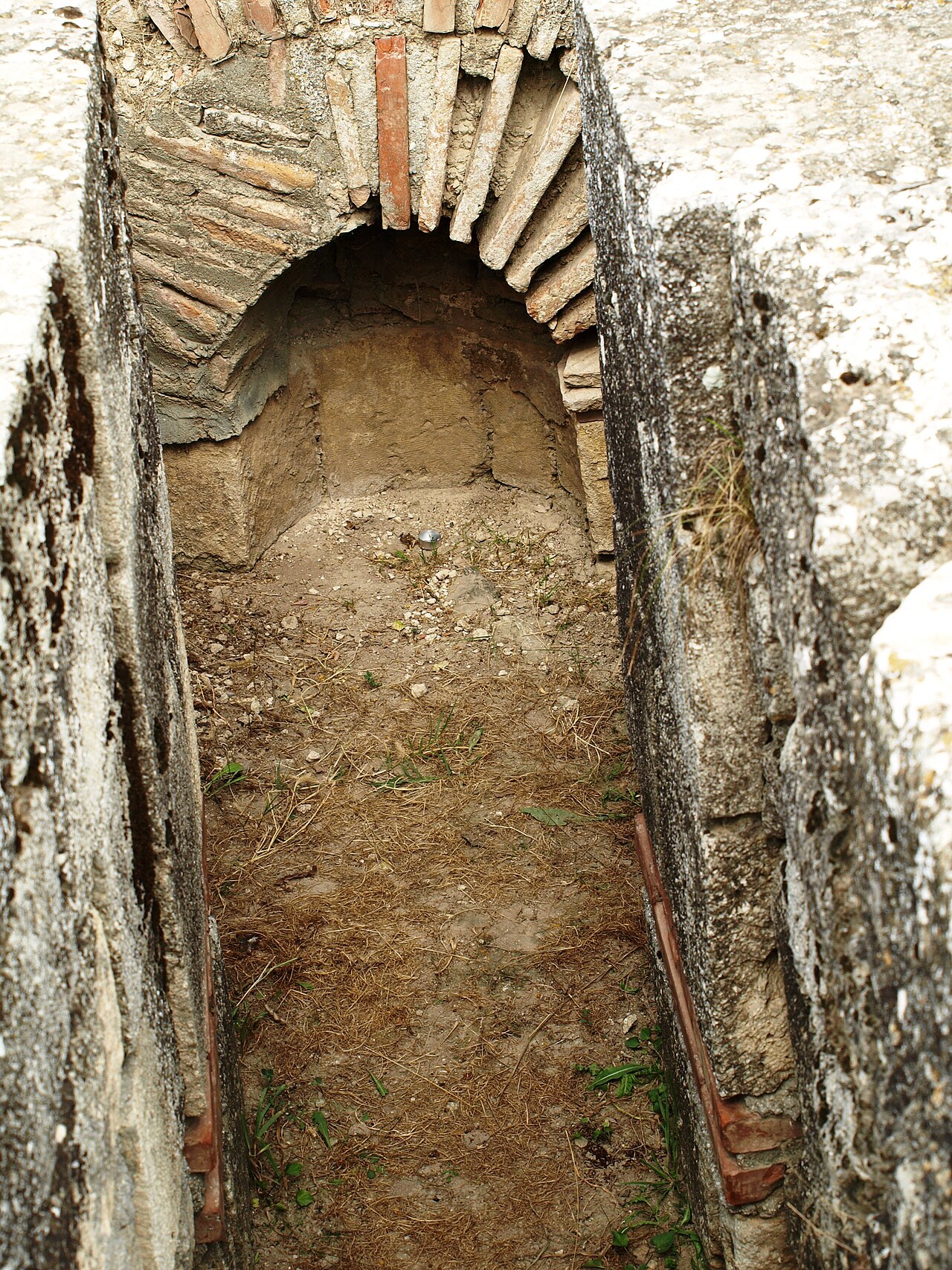
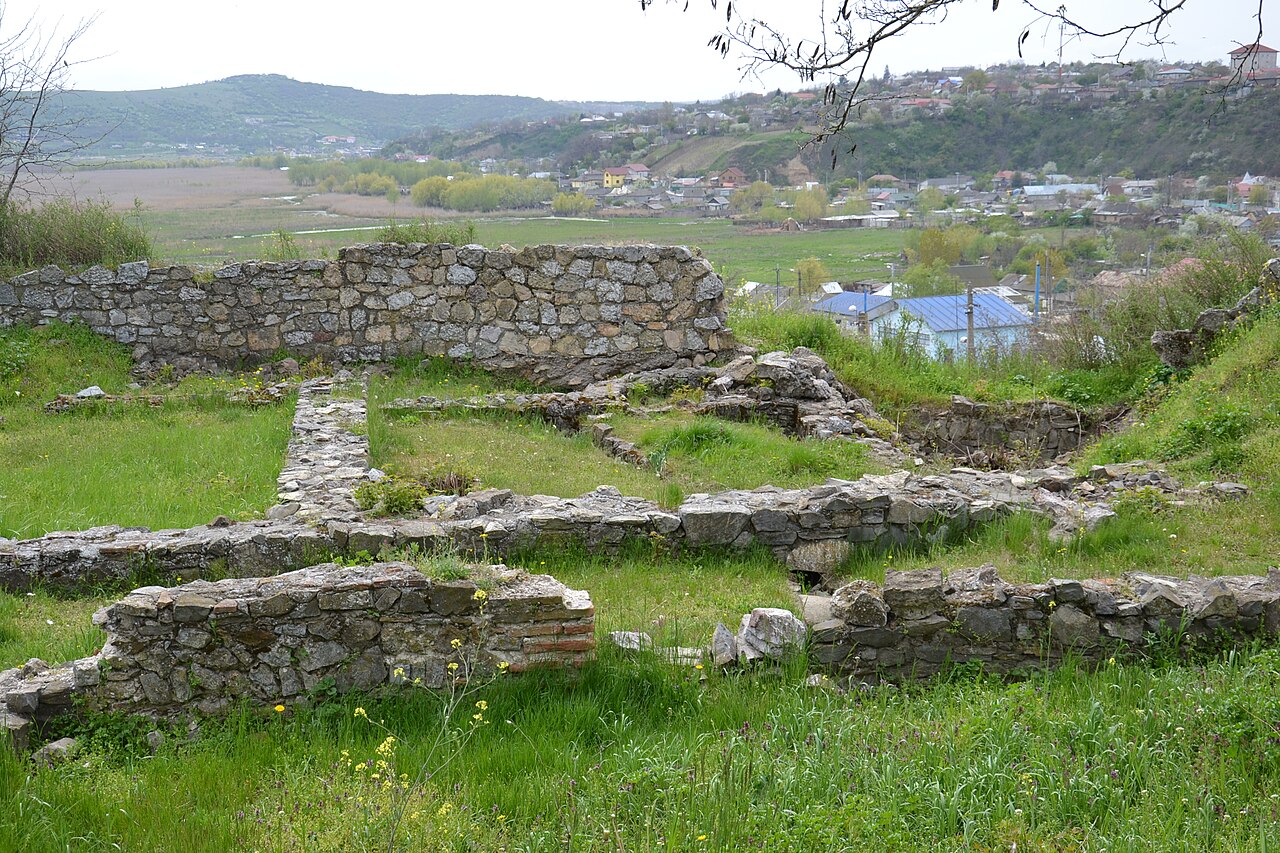
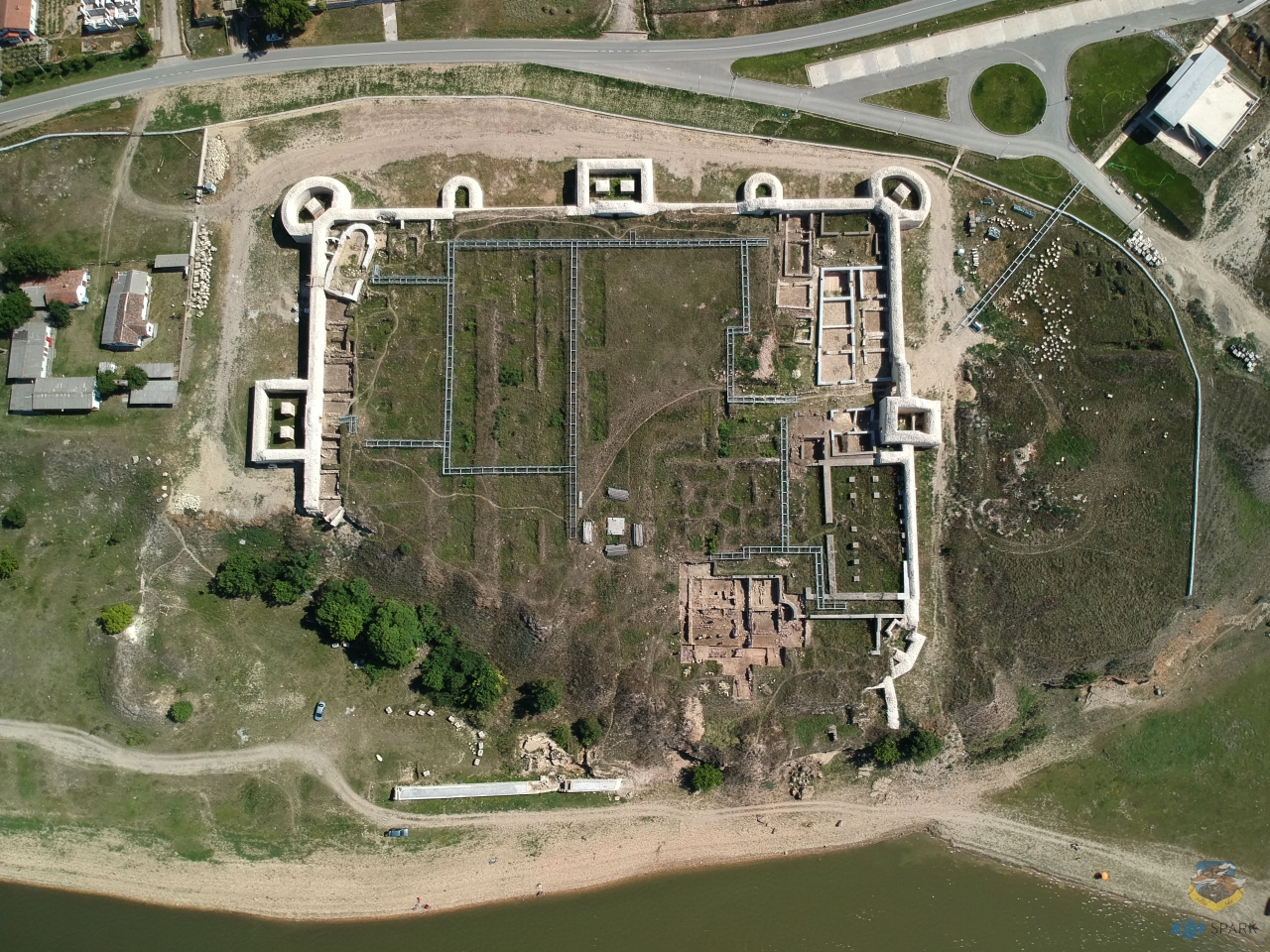
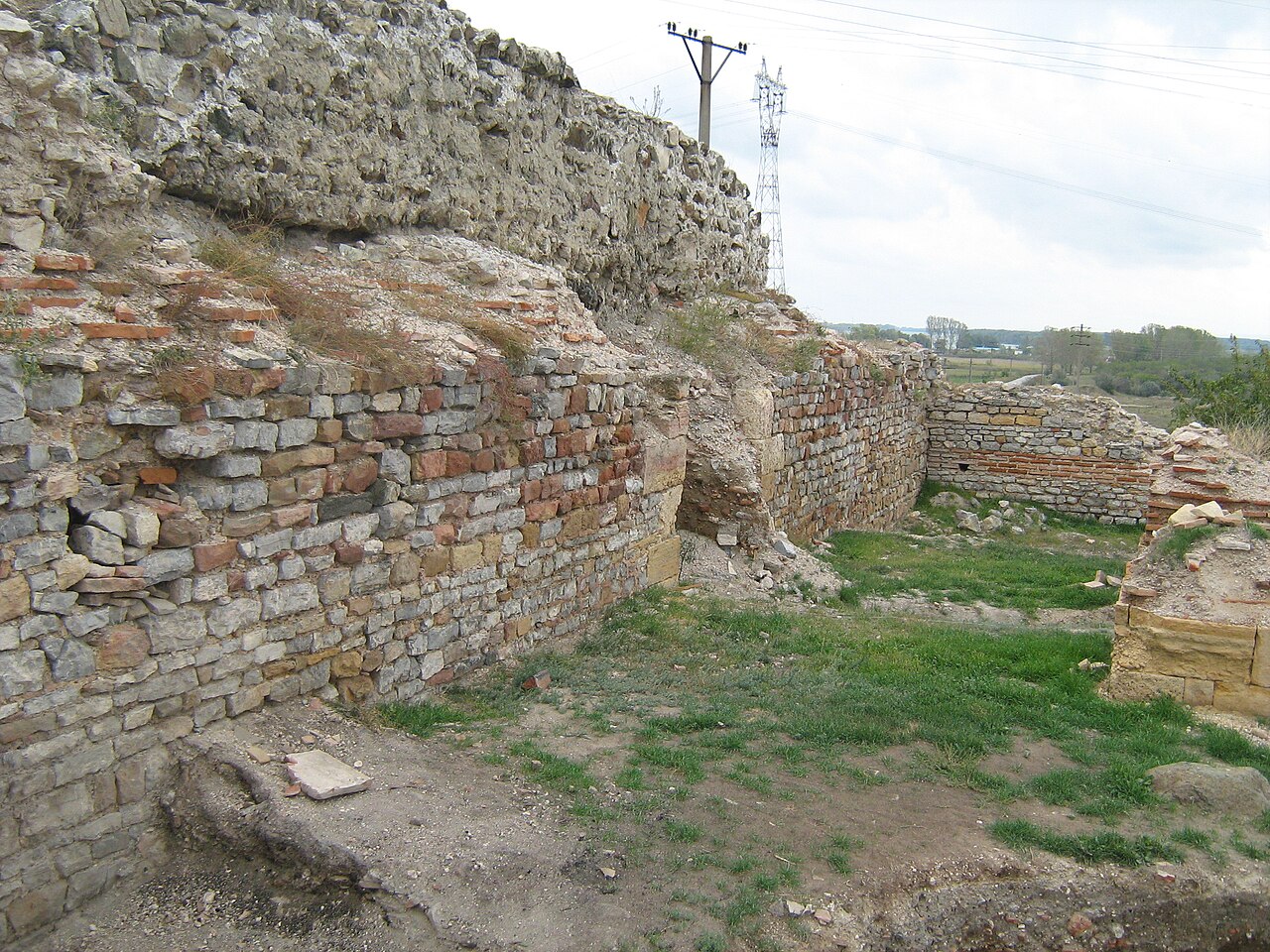
Scarlat Lambrino came upon the “Great Gate” in 1933; in 1987, further works brought it back to light. It is the main mouth of the fortress from the time when the Empire, at the end…
Checked guide · one place = one sheet
62 places found with the current filter.
Scarlat Lambrino came upon the “Great Gate” in 1933; in 1987, further works brought it back to light. It is the main mouth of the fortress from the time when the Empire, at the end…
Beside Tropaeum Traiani, the altar at Adamclisi was raised at the beginning of the second century, in Trajan’s time, for the soldiers who fell in the battles in Dobrogea. It is not…
Not far from the Cave of Saint John Cassian, the limestone forms a natural semicircle, like a cavea. Locals call it an amphitheatre; it has no stages, no tickets, only rock steps a…
Under the Continental Forum Hotel lie, from the excavations of 1988–1989, remains of an amphitheatre and a basilica from the second to fifth centuries. The access gate toward the a…
Discovery The ensemble stands on the north-western slope of Tibișir Hill, at the south-western edge of Murfatlar, above the former Carasu Valley, today the Danube–Black Sea Canal.…
A kilometre north-east of Beștepe, at Piatra lui Boboc, the traces of a Getic dava are kept. In older literature the place — and the settlement beside it — also appears as Salsovia…
At Agighiol, in the commune of Valea Nucarilor, the hills near Tulcea hide a settlement where Getae and Greeks lived side by side. On the ground you see undulations, potsherds and…
On the hills near Telița, at the foot of Măcin, the traces of a fortified settlement known as Edirlen can be read. It is a field site, not a museum: banks, stones and a position th…
At Gate 1 of the port stand the remains of a 5th-century basilica, still in use in the 6th. It is an early Christian hall, raised when Tomis, a provincial capital in Scythia Minor,…
In the northeast of the fortress, on the site of a necropolis used from the 1st century BC to the 1st century AD, the people of Tomis laid out a residential quarter in the 5th–6th…
In 1972, near Ovidiu, the walls of a sixth-century fort of the quadriburgium type came to light: four towers, two round and two rectangular, drawn outside the enclosure. The fortif…
Monument Hill in Tulcea covers the fortress of Aegyssus. The name is Celtic; Ovid, from his exile at Tomis, mentions it as an old town attacked by the Getae. The Romans held the pl…
At Albești, between Callatis and Dionysopolis, archaeologists have opened a fortified settlement lived in mainly in the fourth and third centuries BC. The first enclosure, around t…
On Cape Dolosman, above Lake Razim, the ruins of Argamum (ancient Orgame) stand on a limestone cliff. Settlers from Miletus came here too in the 7th century BC. An ancient source m…
At Cernavodă, on the right bank of the Danube, Axiopolis kept its eyes on traffic and on the ford. The second-century Roman settlement was rebuilt in Byzantine times as well, becau…
On the left bank of the Danube, 3 km south of Ostrov in Tulcea County, a rock some 30 metres high holds layers from Hamangia, Noua and Babadag, then a Roman fortification linked to…
The name is Getic and means, in short, the fortress at the bend. It stands on a limestone spur, between Cernavodă and Hârșova, where the Danube makes a wide loop. Trajan turned the…
Hârșova stands on a rock above the water, and Carsium occupied exactly this headland. The Romans fortified a Getic hearth; the Tabula Peutingeriana and the Itinerarium Antonini not…
Some five kilometres south of Gârliciu, on the Hisarlâc plateau, stand the ruins of Cius fortress. The Romans put a guard point here on the Lower Danube already in the first centur…
Bisericuța Island, near Garvan, holds the Dinogetia fortification. Under Diocletian the Romans moved here a post that had previously been on the left bank, at Barboși. Legio I Iovi…
Above the village of Enisala, the stone walls look out on Lake Razim and the hills of northern Dobrogea. What you walk today is, mainly, a 13th–14th-century fortification, set at a…
Two kilometres from Murighiol, Halmyris was a castrum, a harbour and, from the 4th century, a Christian centre as well. The martyrs Epictetus and Astion are commemorated here. The…
Between Slava Rusă and Slava Cercheză stretches, over some 24 hectares, the largest Dobrogean fortification researched: more extensive than Histria, Tomis or Callatis at their peak…
At Vadu, toward the sea, the ruins called Kara-Harman (then Caraharman) take their nickname from Turkish: “kara” is black, “harman” is a threshing floor, a circle or a mix, dependi…
On the high bank at Isaccea, before the Danube opens toward the Delta, Noviodunum was in turn a Celtic hearth, a Roman castrum, a base of the Classis Flavia Moesica, then a Byzanti…
On the right bank of the Sfântu Gheorghe branch, at Nufăru, the Byzantines raised at the end of the tenth century a fortification to control the ford. John Tzimiskes was then settl…
Musait Hill, between Rasova and Dunăreni, holds the ruins of Sacidava. From Aliman it is about 8 kilometres on a dirt road. The Romans placed a riverside fort here, in a chain with…
Near Mahmudia, the castrum named in the Antonine Itinerary and on the Tabula Peutingeriana held a point on the lower Danube branch from the second and third centuries onward. The n…
At Turcoaia, on the Iglița and Râioasă hills, stood Troesmis - first a Getic settlement, then a Roman castrum and town, from the 2nd century into the 7th. From here a long stretch…
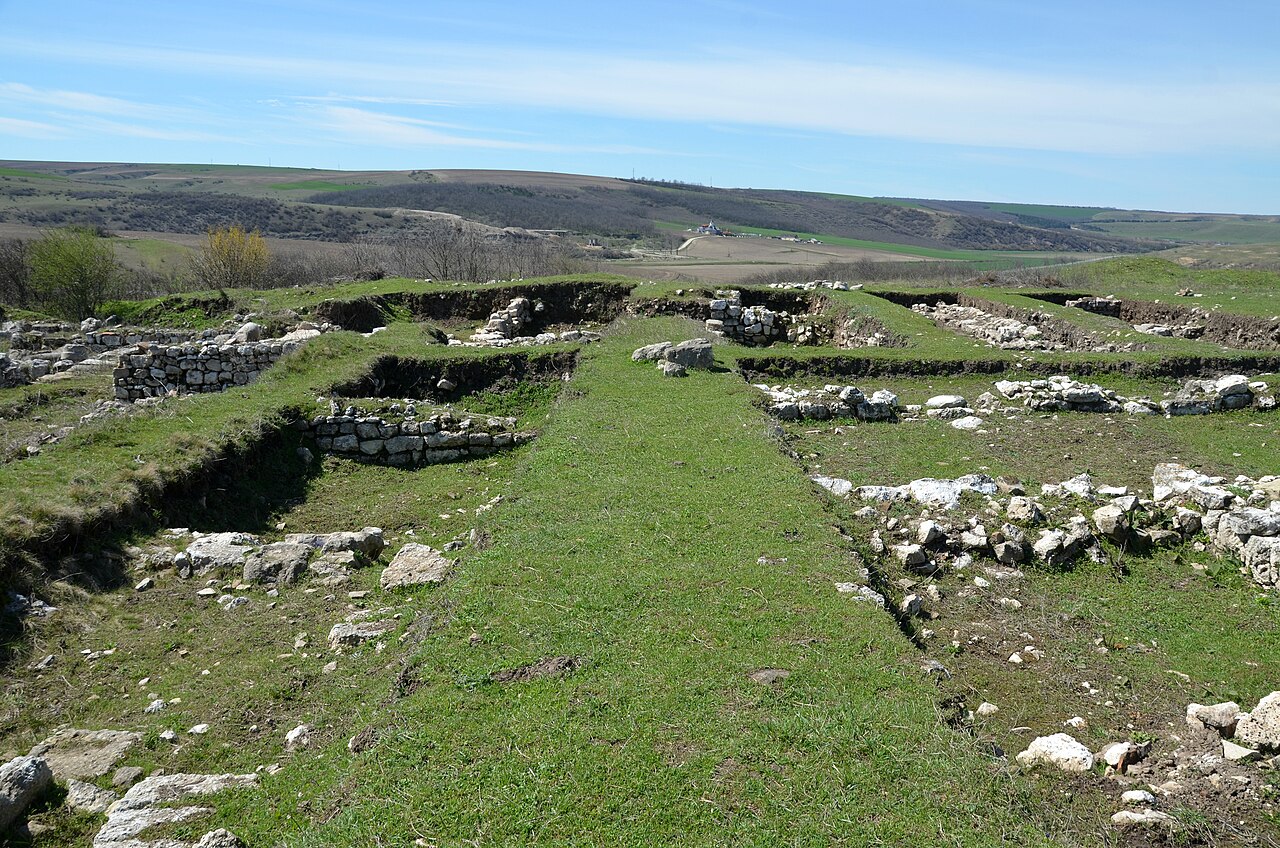
The fortress stands some 600 metres southwest of the village of Adamclisi and about 1,500 metres from the monument on the hill, on the Urluia valley. Trajan settled families of vet…
About 54 kilometres from Constanța, above Pantelimonul de Sus, the walls of Ulmetum stand on a plateau cut by ravines. The Romans fortified the place in the 4th–6th centuries, on a…
Vasile Pârvan opened the excavation at Histria in 1914. After him came Scarlat Lambrino, Emil Condurachi, Dionisie Pippidi. The museum at the site gate, reorganized in 1982, holds…
At Dumbrăveni, in the south of Constanța County, the limestone shelters an ensemble of little churches and cells cut into the rock. Archaeologists date them, broadly, to the 9th–10…
In 1962, during extension works at the “Mihai Eminescu” National College on Boulevard Ferdinand no. 30, the rooms of a basilica crypt from the fifth and sixth centuries came to lig…
In the 4th century, Tomis had on the shore a warehouse-terrace with a mosaic floor, linked to the harbour. The building was brought to light under the seafront and covered with a p…
On Cetății Hill, above Babadag, you read the traces of a fortification from the early Iron Age, eleventh to eighth centuries BC. The archaeological culture is also called Babadag a…
At Plopeni, between the fourth and sixth centuries, a fortification on the late Roman line was in use, then taken over by the Byzantine administration. It guarded roads and village…
The building of the former Ottoman gendarmerie keeps the sober plan of a public-order seat from the eighteenth and nineteenth centuries: regular windows, a thick wall, an inner cou…
Right under the Roman Mosaic Edifice sit the warehouses of the ancient port: vaulted rooms, lined up to hold grain, oil, wine and everything that came in from the Black Sea. It is…
At the edge of Migilet forest, near Ion Corvin, a low cave is tied to the tradition that the apostle Andrew stayed here in the 1st century. The monastery above was organized in 194…
Torrential rains in the 1970s brought to light, at Niculițel, the dome of a crypt. Inside were the bones of the martyrs Zotikos, Attalos, Kamasis and Filippos, with the names writt…
In 1988, on Mircea Street, at the excavation for some blocks, Constantin Chera and Virgil Lungu came upon a painted tomb from the second half of the fourth century, in the area of…
The museum in Hârșova takes its name from the fortress on the rock. The collection covers Hamangia, Gumelnița, the Roman period and the Danube Middle Ages. There are pieces from th…
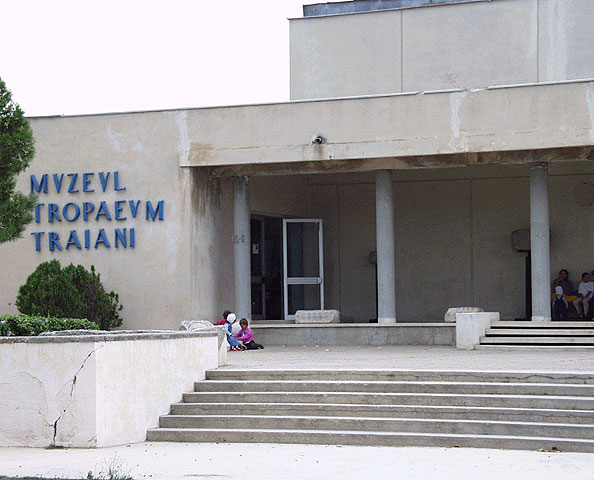
Beside the Tropaeum Traiani monument, the museum at Adamclisi holds the pieces that explain the victory of 102: metopes, weapons, inscriptions, a model of the fortress. Trajan mark…
On 3 June 2006, Cernavodă opened the Axiopolis Museum in an older building, restored. The thread is clear: from the Thinker of Cernavodă (the Hamangia pair, 6th–3rd millennia BC) t…
If you want to understand where Mangalia began, start in the town centre, at the museum opened in 1959. The collection is built around Callatis: the colony of Dorians who came from…
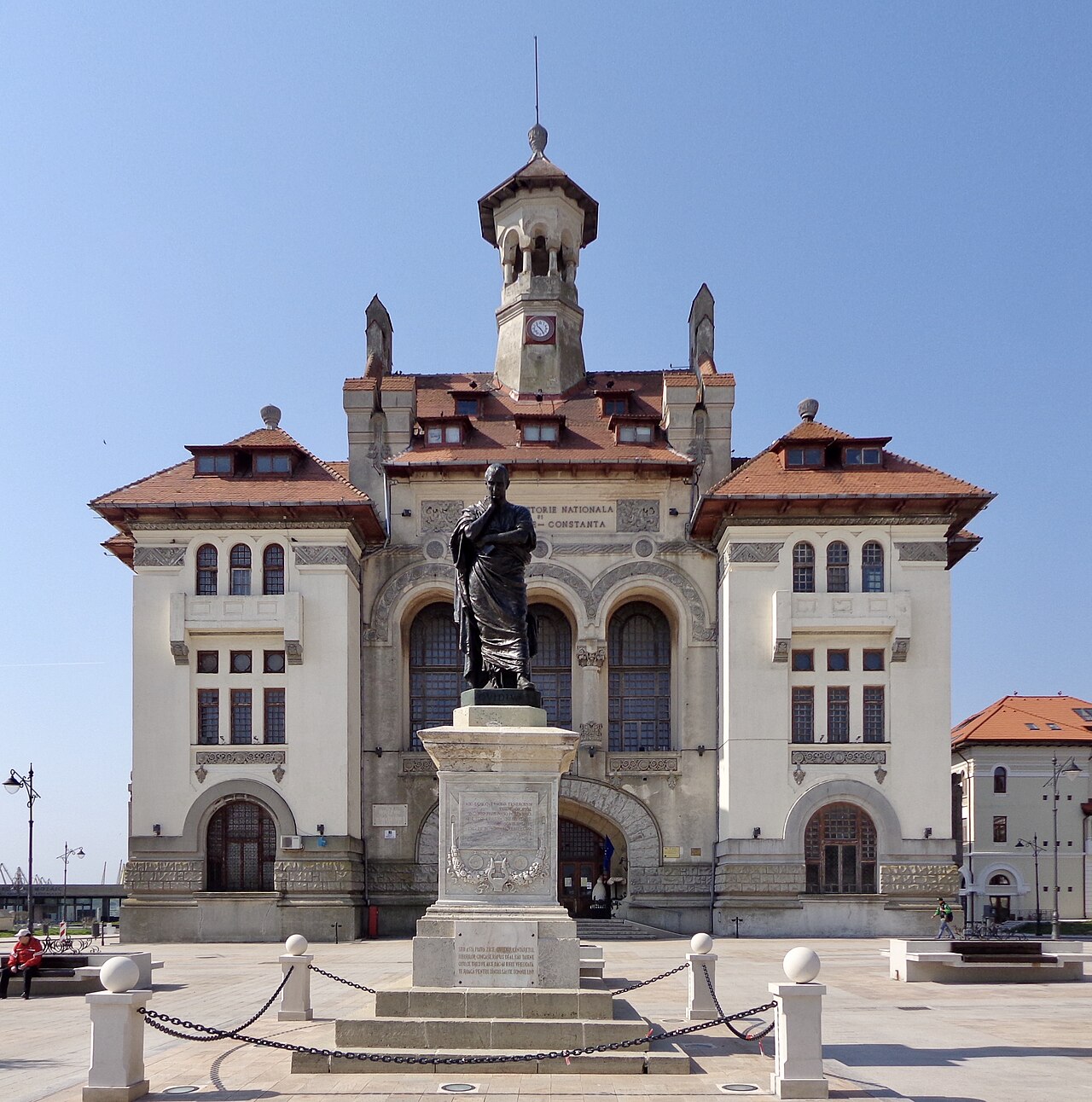
In Ovidiu Square, in the communal palace of 1912–1921, stands the national history and archaeology museum. The collection runs past 430,000 pieces - the second of its kind in the c…
Some nine kilometres downstream from Ostrov, the Danube holds an island you reach only with the boats of locals. Păcuiul lui Soare keeps the walls of a Byzantine fortification link…
In 1959, along the fourth-century Romano-Byzantine wall - held until the sixth century - a park was laid out with pieces taken from excavations. The restorations of that time gave…
At the neck of the peninsula, where old Constanța begins, Cathedral Park — more and more often called the Archaeological Park — holds in view walls, column bases and lapidarium pie…
Site photos: Wikimedia Commons or the newsroom, credit on each sheet. No images from dobrogea150.ro.
Nothing found. Try another term.