Church of Saint Elijah
In the Viile Noi neighbourhood, the church on the street that leads toward Medeea was raised in 1935 by the German community, with Gothic lines — a sharp tower, high windows, a pla…
Checked guide · one place = one sheet
41 places found with the current filter.
In the Viile Noi neighbourhood, the church on the street that leads toward Medeea was raised in 1935 by the German community, with Gothic lines — a sharp tower, high windows, a pla…
On Callatis Street no. 1, close to the sea, the Armenians of Constanța keep the church of “Saint Mary”. The community is attested in Dobrogea from the fifteenth and sixteenth centu…
The Church of the Protection of the Mother of God (Pokrov) in Jurilovca is the house of worship of the Old Believer community — the Lipovans who made the village one of Dobruja’s l…
Harry Goldstein designed in 1930, at Grigore Tocilescu no. 2 with Horia, a corner block with the air of a liner: long balconies, band windows, a ship’s volume. Constanța of that ti…
Mustafa Kemal (1881–1938), born in Salonika, came out of the First World War as an officer and led, between 1919 and 1923, the war from which the Republic of Turkey appeared. The b…
In 1909, at Tomis no. 28, corner with Vasile Țurcanu, Andi Caraciali raised a house on an almost square plan, two levels and an attic. The small arched windows and the corner balco…
Demostene Tranulis, the man behind the Fantasio Theatre and a support for “Mircea cel Bătrân” High School and for the community church, made himself an Art Nouveau house in 1914. O…
In 1922 Cristu (Hristu) Frangopol raised a neo-Romanian building with a generous ground floor, two storeys and an attic. The entrance is wide, thought for a family of means, not fo…
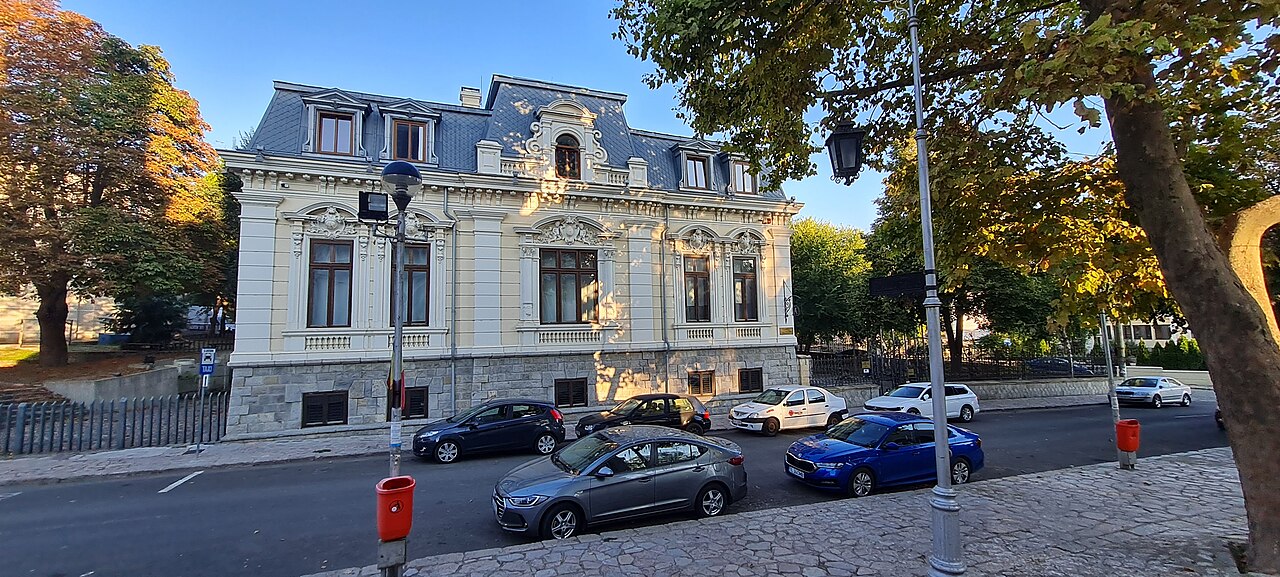
At the corner of Callatis and Marcus Aurelius, in 1897, Paul Ernst drew a two-level neoclassical house for the Parusi family. The plan is rectangular, the façade has a more project…
In 1897, the Greek merchant Theodorou Roussou asked the architect Pelopidas Couppa for a town house: a symmetrical façade, tall windows, a drawn cornice, a recognizable interior st…
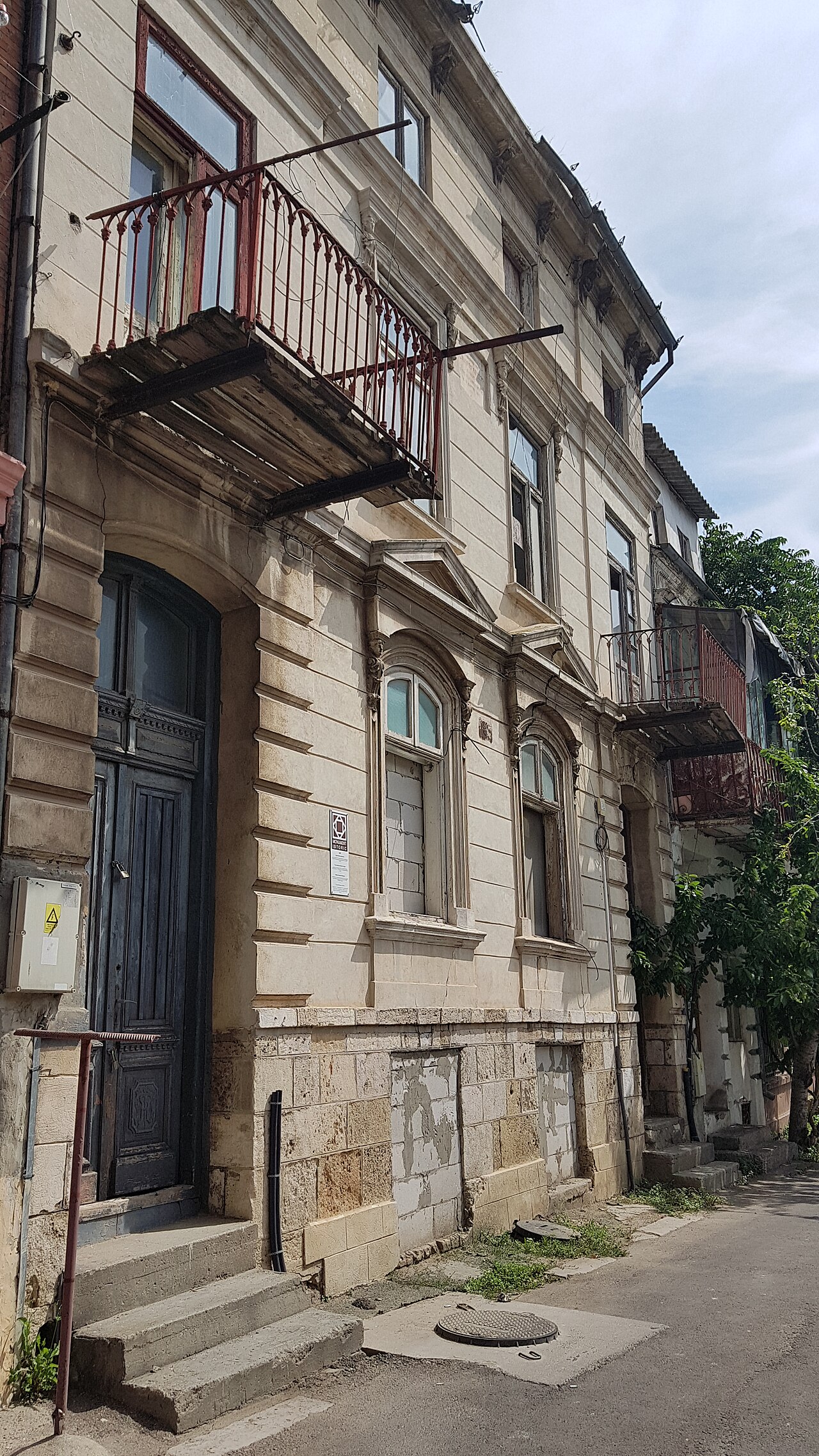
Zafiros Kyryakou raised his house in 1894, 16 years after the Union of Dobruja, on a plot in the Decebal area — a merchant’s dwelling, not a palace. The monument (LMI CT-II-m-B-028…
Between 1897 and 1899, the Greek merchant Alexandru Avramide built himself a house next to St. Nicholas Cathedral in Tulcea. The façade is Belle Époque, with stucco and tall window…
On Elisabeta no. 15, in 1910, the merchant I. E. Abramoglu raised, to the plans of Christo V. Sotiriu, a house with a bright basement, ground floor and storey. It is LMI, category…
In Mangalia, Mehmet Hagi Ismail's house is an Ottoman dwelling from the end of the 18th or the beginning of the 19th century: thick walls, a wooden ceiling, an inner courtyard. It…
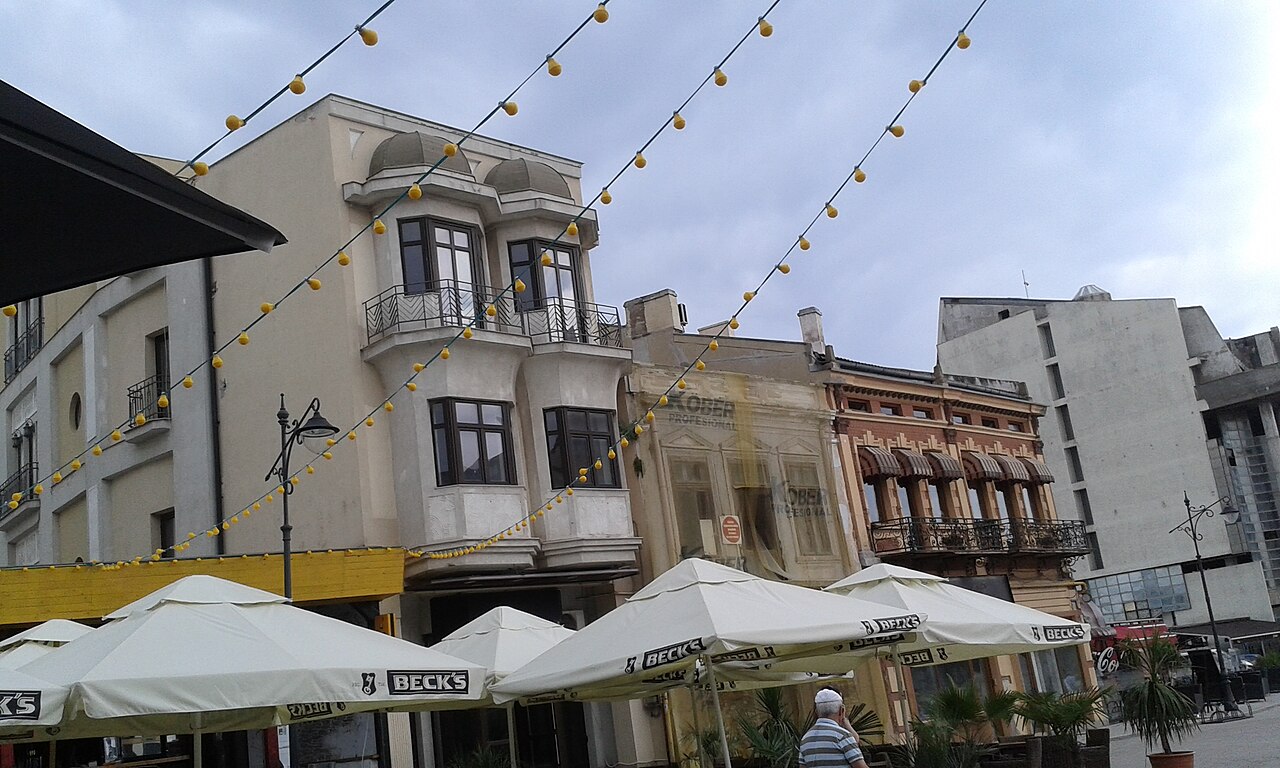
In Ovidiu Square no. 4, the bay windows come out of the wall like glass lanterns. That is why it is also called “the house with bay windows”. In 1913 the architect Nicolae Michăesc…
In Cobadin, 30 kilometres from Constanța, a house from 1927 was lived in until almost the present day. On 5 June 2023, the Democratic Turkish Union of Romania opened an ethnographi…
Babadag, from Turkish Baba Dağı - Father's Mountain - takes its name from Sari Saltuk Baba, the dervish who arrived around 1300. The town is attested from the thirteenth century. T…
In the village of Tătaru, the cemetery on the slope is the place where the local Muslim community has buried its dead for generations. Dobrogea has held Tatars since the fifteenth…
On Muratan Hill, near Pecineaga, a stone cross marks the field grave of more than 400 German soldiers fallen in October 1916, in the fighting at Topraisar-Muratan. It was raised by…
On C.A. Rosetti Street no. 5 in Sulina, a former navigator has filled a house with maps, photographs, documents and objects from the nineteenth-century port. The “Old Sulina” exhib…
After the Union of 1878, the Greek community in Constanța grew (thousands of people by 1881, with their own schools and churches). Between 1920 and 1940, this building was the seat…
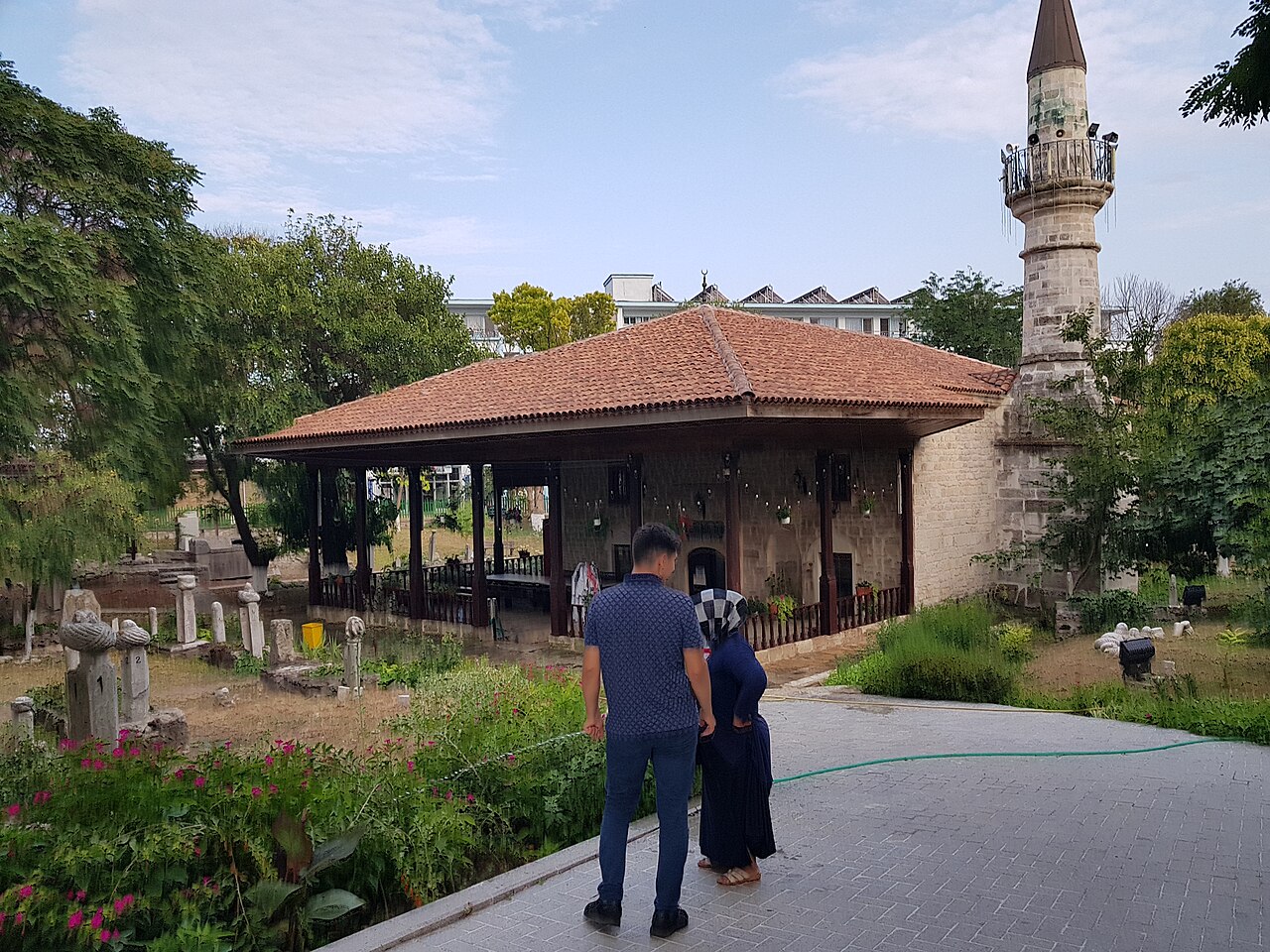
In 1575, Esmahan Sultan - daughter of Selim II and wife of the grand vizier Sokollu Mehmed Pasha - funded a mosque in Mangalia. It is the oldest surviving Muslim place of worship i…
After the Crimean War (1853–1856), Sultan Abdul-Medjid ordered a new town for the Tatars who had come from Crimea. Medgidia was laid out on a plan, and the great mosque was built i…
Sultan Abdul Aziz ordered, in 1863–1865, a mosque next to the Turkish quarter in Tulcea. It had a school beside it. The roof is of tile, the minaret is tall for the scale of the to…
The mosque in the village of 2 Mai was finished in 2006, for the Muslims of the locality and of the villages around — Vânători, Tatlageac, Hagieni, Albești, Moșneni. The hall holds…
The village in Limanu commune was founded in 1824, most likely by Crimean Tatars coming from the Crimean Peninsula after the Khanate fell under the Russian Empire, in 1783. The old…
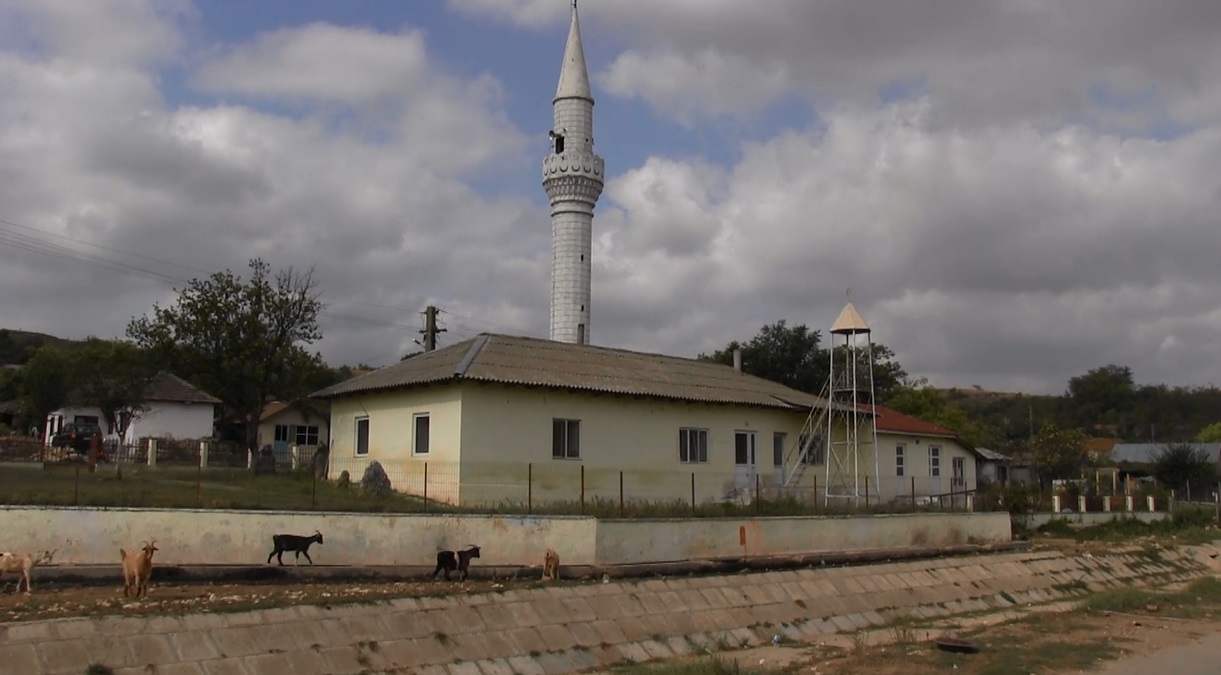
Fântâna Mare, Bașpînar in Turkish, is a village in Independența commune lived in almost only by ethnic Turks. The mosque has held the community together for generations; traces of…
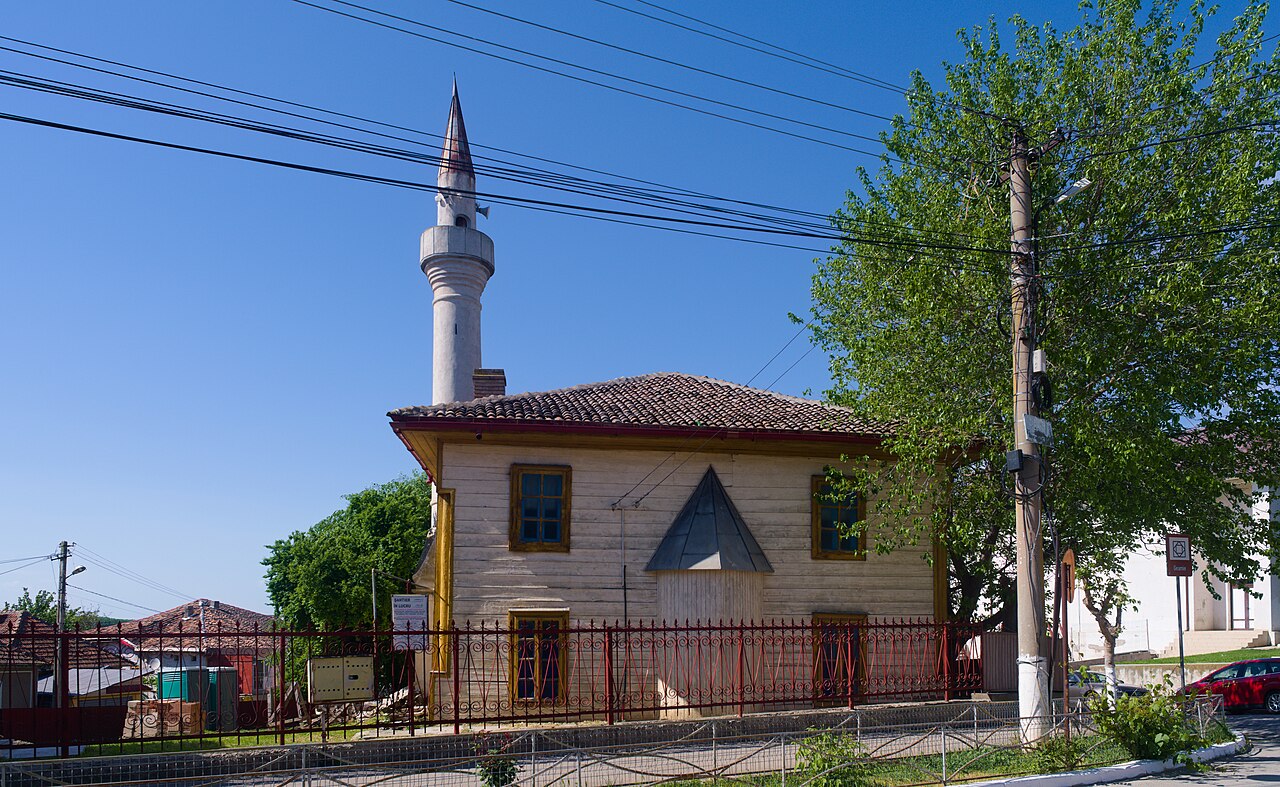
At Amzacea, a mosque of Dobrogea stone, with a short minaret and a pantile roof, was built around the mid-19th century, in the years of the Crimean War. The form is cubic, of a vil…
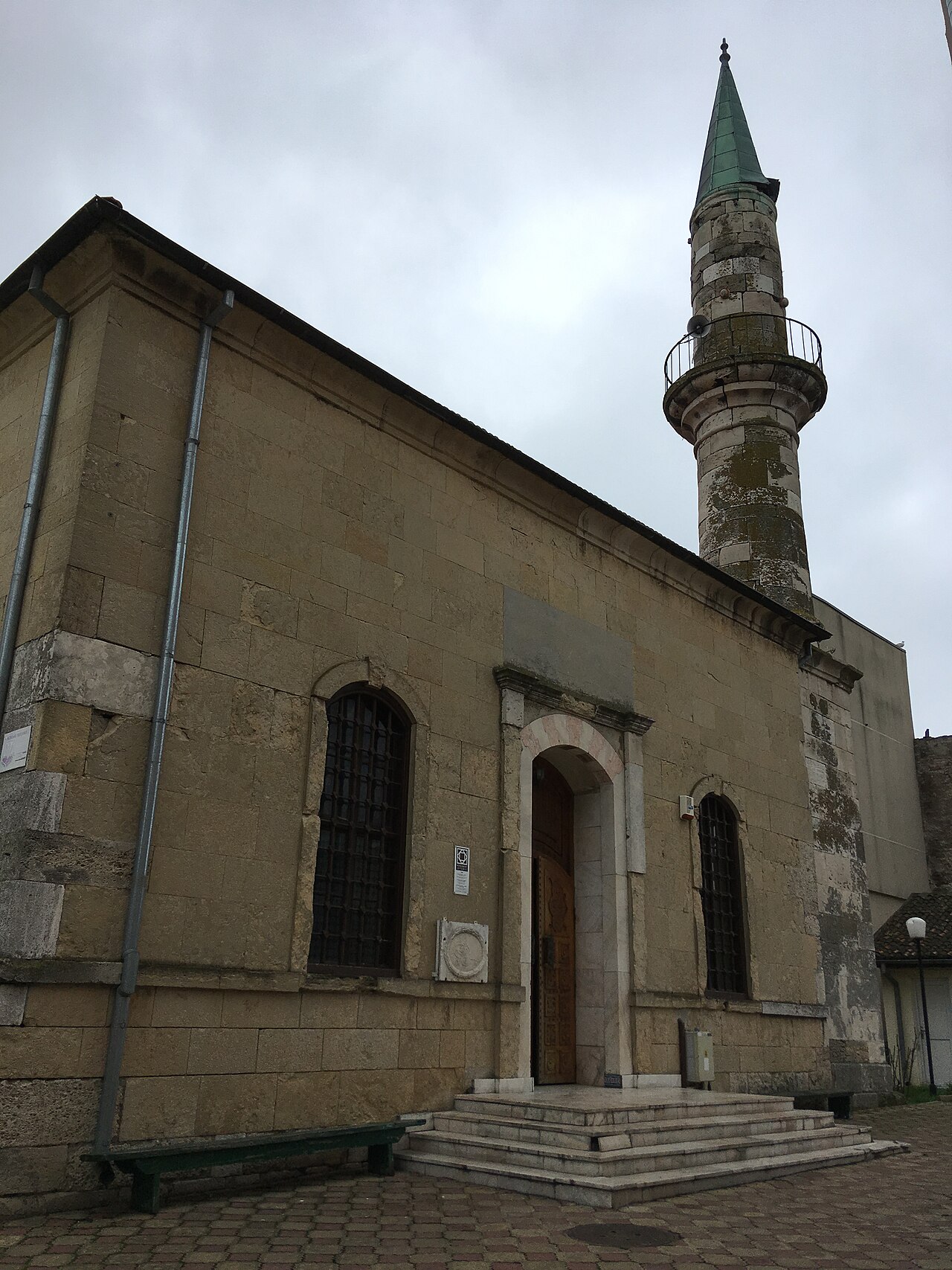
At 41 Tomis Boulevard, between 1861 and 1869, in the time of Sultan Abdul Aziz, the mosque called Hunkiar (or Aziziye) was built. It is the oldest Muslim place of worship remaining…
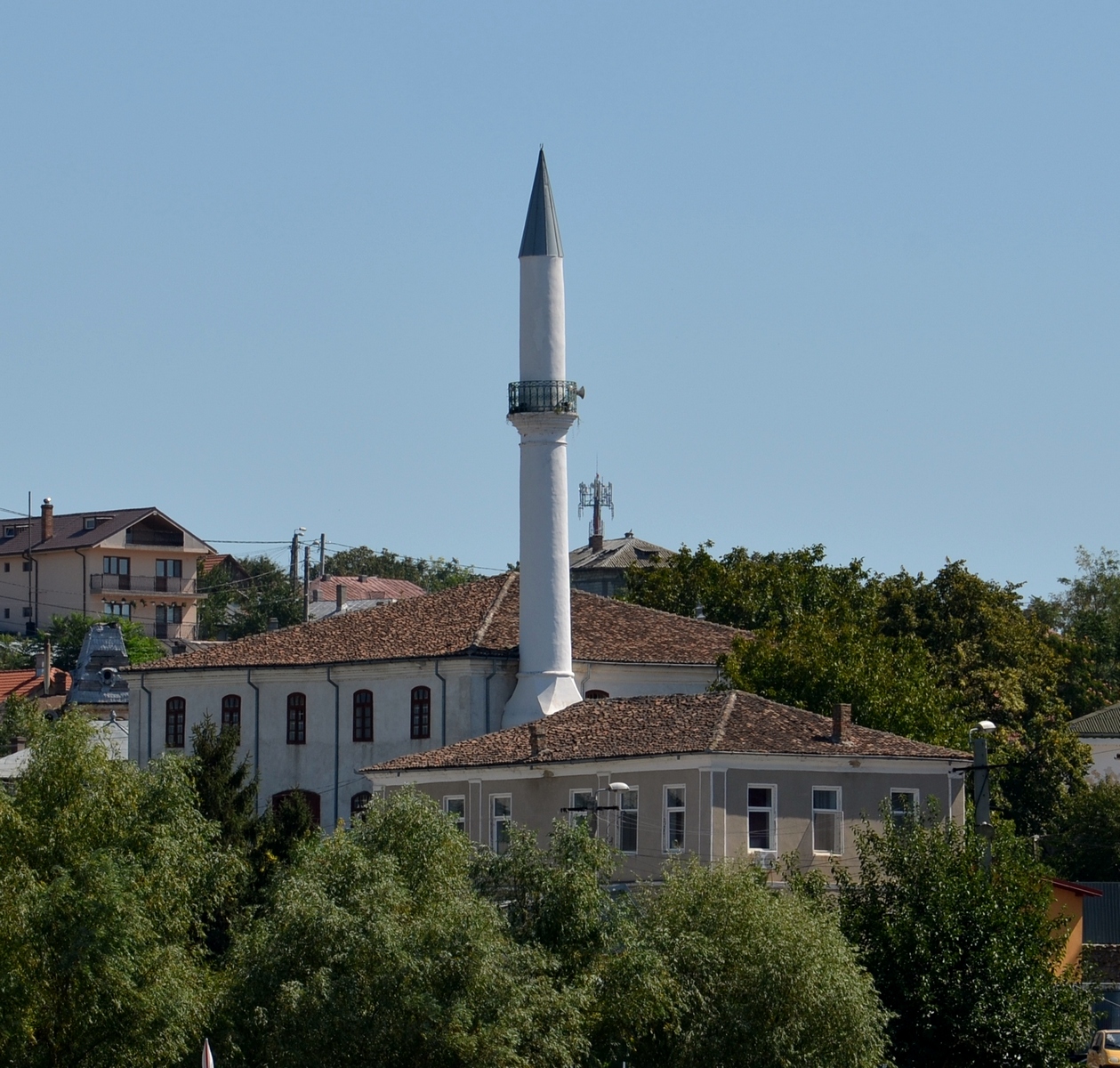
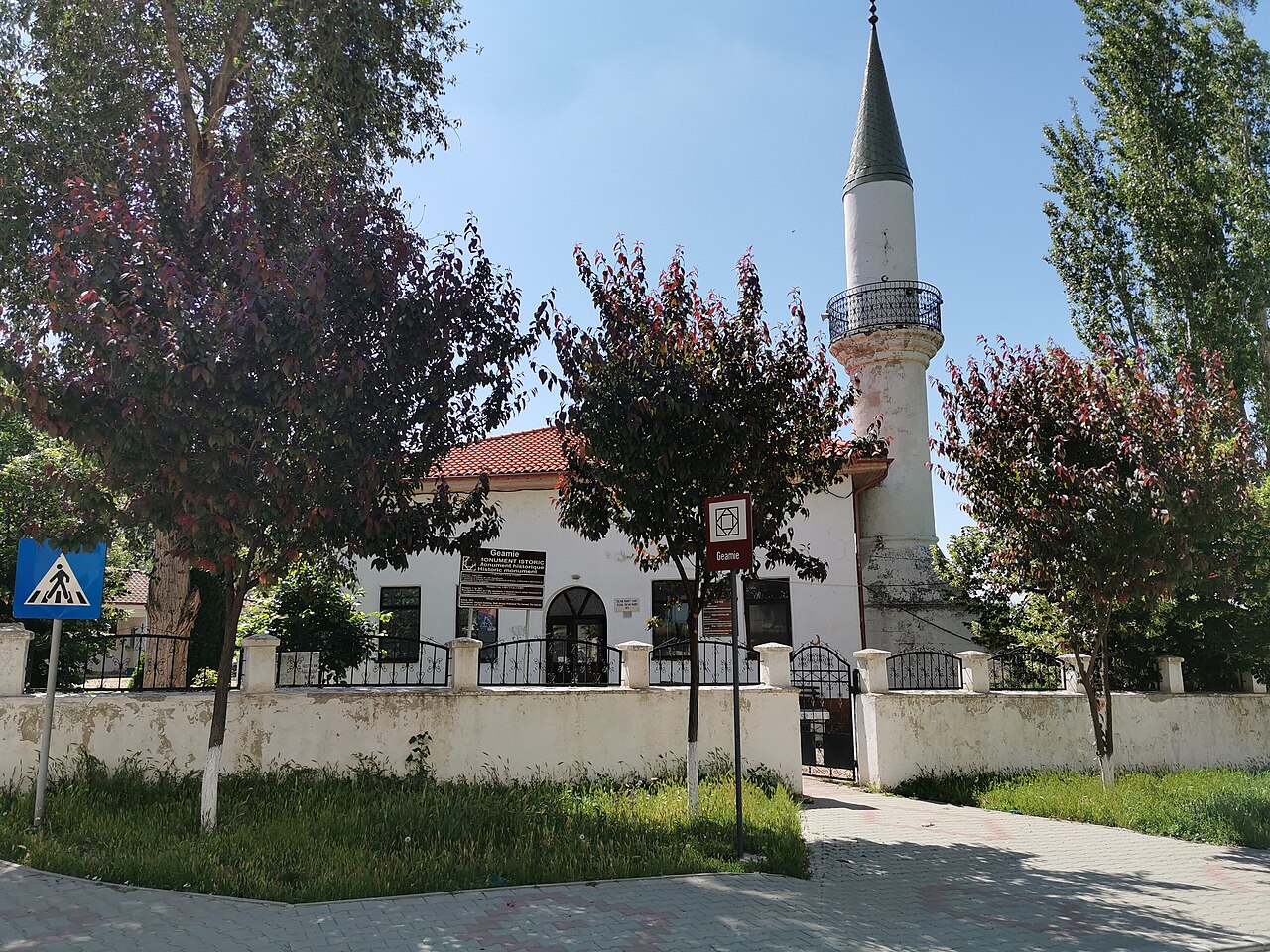
At 19 1 Decembrie Street, in the centre of Isaccea, stands the mosque tied to Mahmud Yazîcî - Mahmud Efendi, a scholar from a family of yazîcî, that is, scribes. The walls most lik…
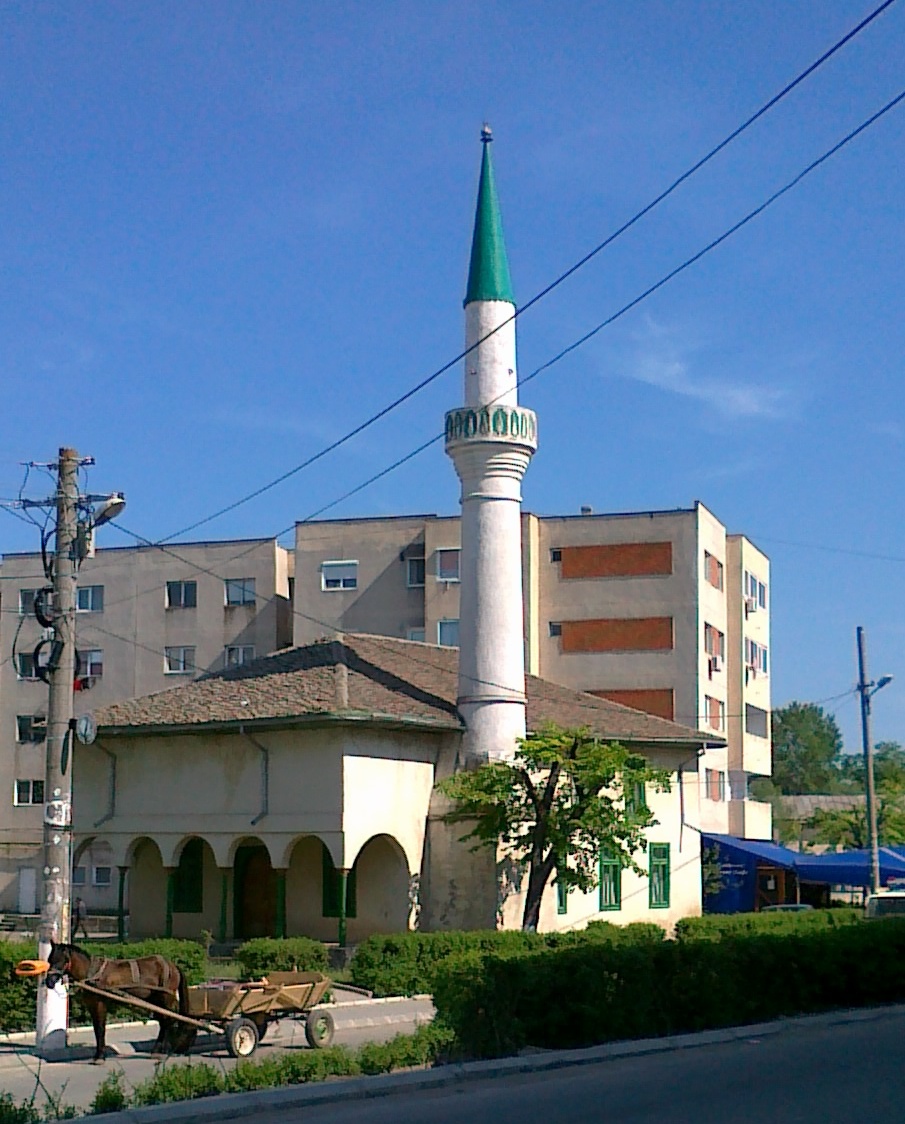
The mosque in Cernavodă, tied to the name of Memet Efendi, is dated to the 18th century - local tradition says 1756, in the time of Osman III. It is a Category A monument, with thi…
In Măcin, the mosque raised in 1860 bears the name of Mestan Aga. The wave after the Crimean War (1853-1856) had come, when the Russian Empire pushed Muslims from southern Bessarab…
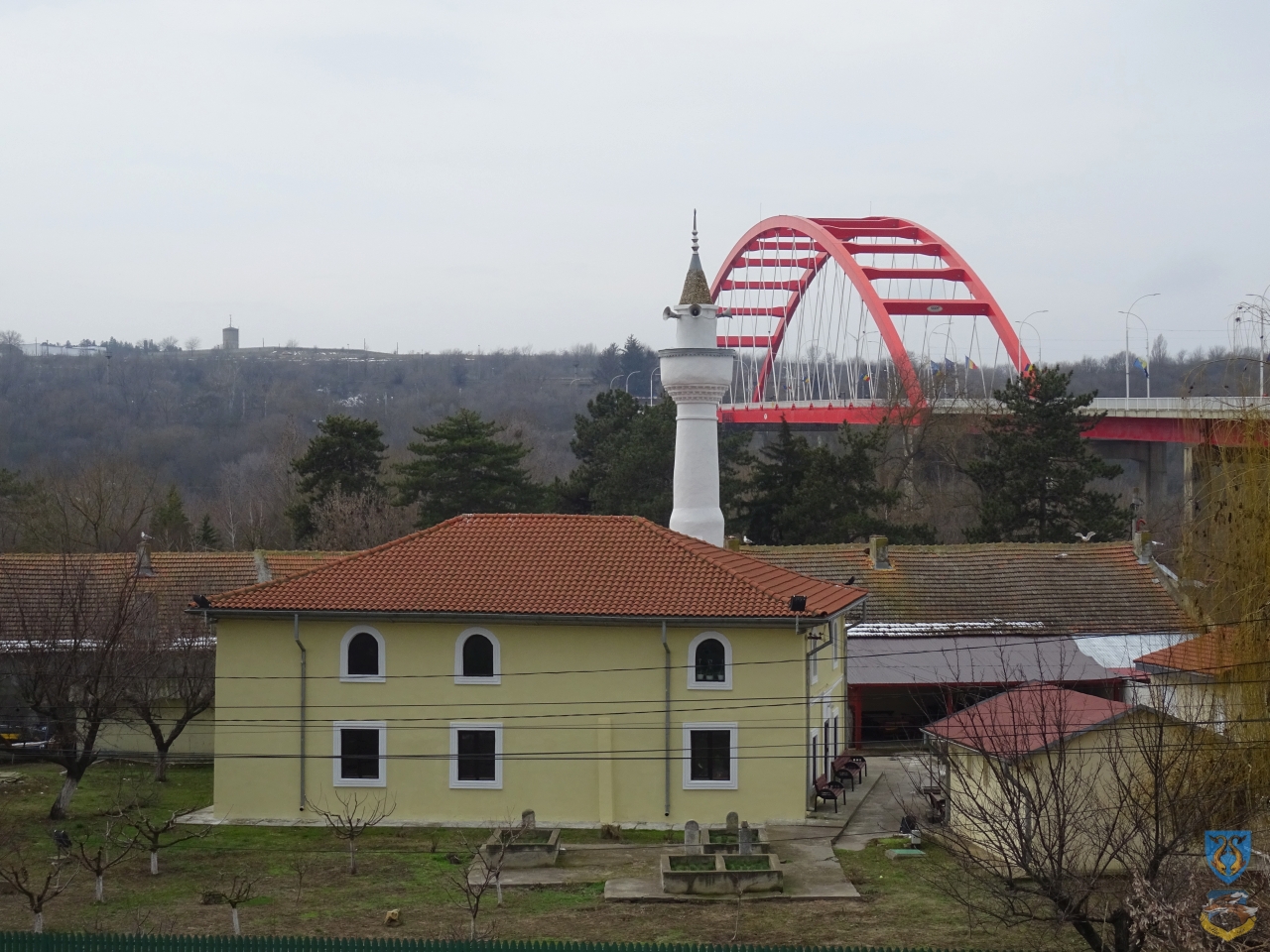
In 1812, after Bessarabia passed to the Tsarist Empire, Sultan Mahmud II ordered a mosque at Hârșova, on the bank that had remained Ottoman. The building is simple, of stone, with…
At 22A Farului Street, in the former village of Anadolchioi - joined to Constanța only in the 1920s–1930s - stands a mosque built in 1868–1869. The founder is not documented; the c…
The museum in Tulcea bought in the 1970s a household from the village of Enisala and conserved it on the spot. The house is from the beginning of the 20th century: entrance room, l…
At 3 Ecaterina Varga Street, between 1885 and 1890, Abdul Hagi Zaid built a Balkan-type inn: a courtyard for horses and carts, guest rooms along the sides. It is the only building…
In the centre of Cobadin stands a monument of stone and mosaic paid, in good part, from money gathered in the commune. It is for the locals fallen in 1916-1918, on a territory wher…
After 1878, Carol I asked for a new place of worship for the Muslim community in Constanța. Between 1910 and 1912 today's mosque was built, on the site of the Mahmudia Mosque. The…
Panaghia House, in the centre of Babadag, was part of a Muslim seminary built on the site of a 17th-century madrasa. In the 20th century it had other uses. Since 1970 it has housed…
At the beginning of the twentieth century, the Ashkenazi Jews - some three quarters of Constanța's community - wanted a synagogue to match. The foundation stone was laid in 1910, t…
A few metres wide, a short length and houses pressed against one another: that is Wind Street, a discreet link through the old quarter of Constanța. It is not a boulevard and has n…
Site photos: Wikimedia Commons or the newsroom, credit on each sheet. No images from dobrogea150.ro.
Nothing found. Try another term.