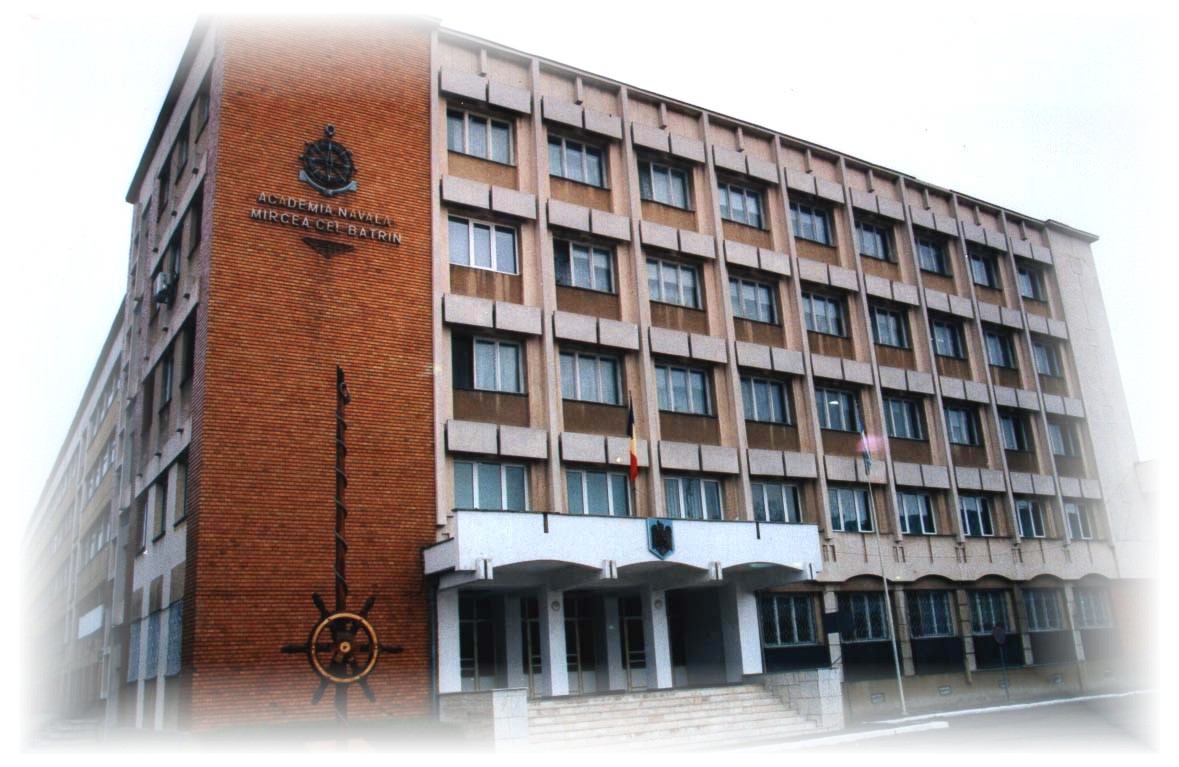
Mircea the Elder Naval Academy
On 17 November 1872 the Flotilla School opened at Galați, the first organized form of training for the people on Romanian ships. From there the thread runs to today’s Naval Academy…
Checked guide · one place = one sheet
57 places found with the current filter.
On 17 November 1872 the Flotilla School opened at Galați, the first organized form of training for the people on Romanian ships. From there the thread runs to today’s Naval Academy…
Alexandru Ghinea was born on 6 February 1953, at Bistrița in Mehedinți, watching the ships on the Danube. He did the Naval Petty Officers’ Military School in Constanța, was posted…
In the perimeter of old Tomis there remains a spectacle building from the second and third centuries: stone, a semicircular plan, seats cut in the slope. Here the inhabitants gathe…
A kilometre north-east of Beștepe, at Piatra lui Boboc, the traces of a Getic dava are kept. In older literature the place — and the settlement beside it — also appears as Salsovia…
After 1878, when Dobrogea passed to Romania, Constanța began to gather books for the public. The first attempts belong to the end of the nineteenth century, together with the schoo…
The library in Sulina bears the name of Jean Bart (Eugeniu Botez) and has functioned since 1897, when the port was full of clerks of the European Commission of the Danube. Since 19…
On Callatis Street no. 1, close to the sea, the Armenians of Constanța keep the church of “Saint Mary”. The community is attested in Dobrogea from the fifteenth and sixteenth centu…
Maria Tănase sang often in Constanța and Mamaia, in years when the coast was a summer stage, not only a beach. The house that bears her name marks that tie; it is not a classic mus…
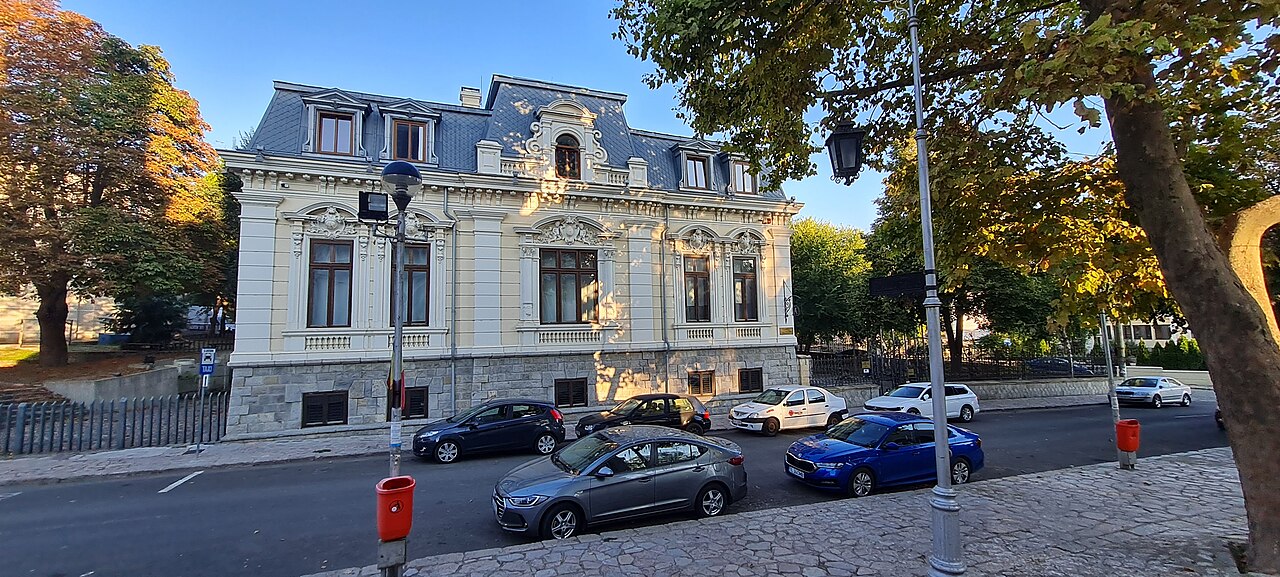
Between 1897 and 1899, the Greek merchant Alexandru Avramide built himself a house next to St. Nicholas Cathedral in Tulcea. The façade is Belle Époque, with stucco and tall window…
Between 1976 and 1983 the General Union of Trade Unions raised on the Constanța shore a house of culture to the plans of the architect K. Ghengiomer. The building is large, with a…
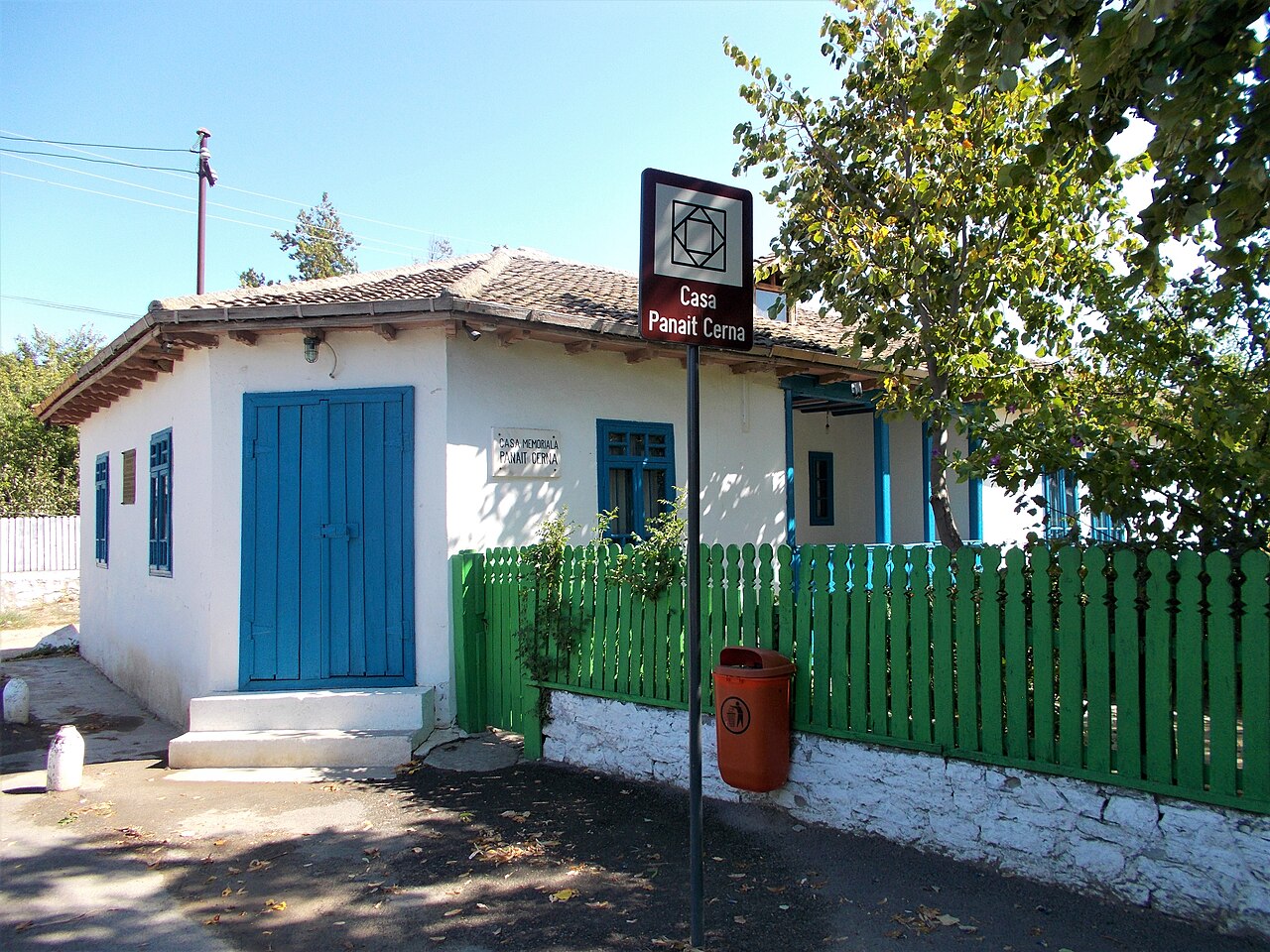
The poet Panait Cerna was born in the village of the same name, between Tulcea and Măcin. In 1966 his brother gave the locality the parental house - a craftsman's dwelling from the…
In Cobadin, 30 kilometres from Constanța, a house from 1927 was lived in until almost the present day. On 5 June 2023, the Democratic Turkish Union of Romania opened an ethnographi…
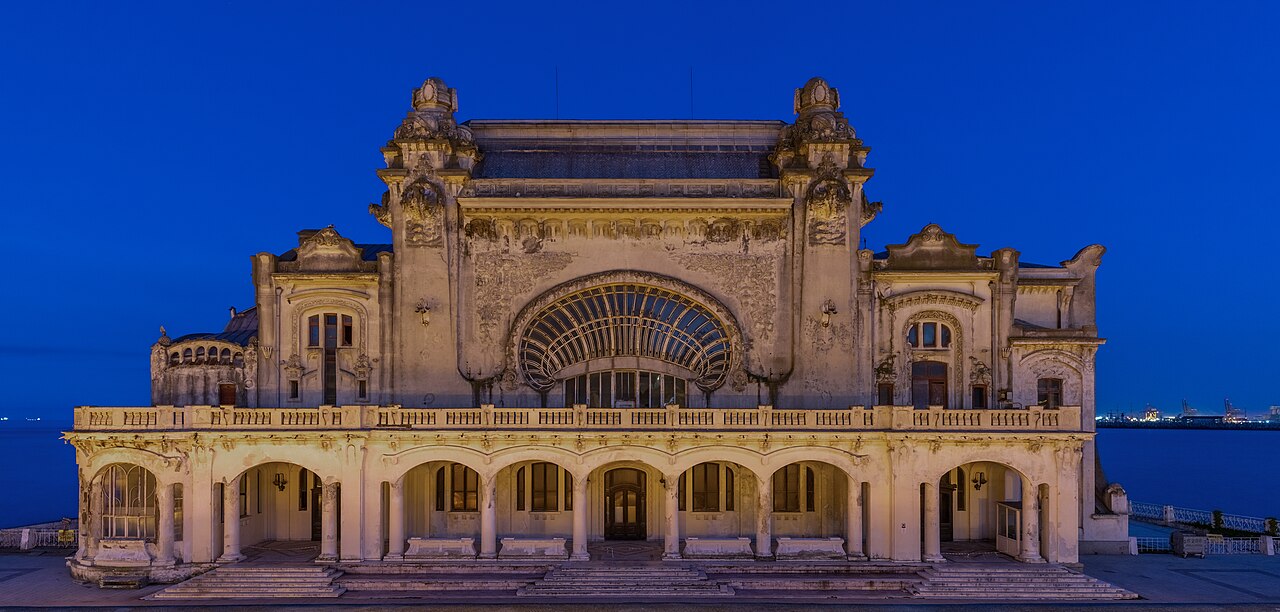
In 1910, at the end of the seafront, a casino designed by architect Daniel Renard opened in Art Nouveau lines. On the same promontory there had already been an 1880 Kursaal and an…
In Mamaia, the sundial works as all of them have worked since Antiquity: a gnomon casts the shadow, and the hour is read on the dial. It is set as a park piece, not as a station cl…
Teodor T. Burada (1839–1923) walked through villages with a folklore notebook, collected melodies and wrote about customs at a time when few treated that seriousness. The county ce…
In the 1960s Constanța people went to the cinema at “Republica”: almost 1,000 seats and, on good days, up to seven screenings. It was the second cinema by size in the country, afte…
Next to the Tulcea promenade, a three-level building holds the Delta's ecotourism museum centre. The exhibition is interactive: habitats from Razim-Sinoe to the plateau and the Măc…
On Traian Street, in the old centre, the building raised between 1906 and 1908 was thought as a Girls’ Secondary School — one of the few modern schools of this kind in Dobrogea aft…
The college started at the end of the nineteenth century, when Dobrogea was just linking administratively to Romania and the city needed a serious lycée for boys. The building you…
Vasile Pârvan opened the excavation at Histria in 1914. After him came Scarlat Lambrino, Emil Condurachi, Dionisie Pippidi. The museum at the site gate, reorganized in 1982, holds…
At Țepeș Vodă, in the churchyard or in the cemetery, you will not find a monumental ensemble, but crosses of stone, concrete or wood with the names of the men taken in 1916-1918. T…
In 1972 Constanța opened the first dolphinarium in south-eastern Europe. It is part of the Natural Sciences Museum Complex, together with the Aquarium, the Planetarium and the Mini…
In the 4th century, Tomis had on the shore a warehouse-terrace with a mosaic floor, linked to the harbour. The building was brought to light under the seafront and covered with a p…
On Cetății Hill, above Babadag, you read the traces of a fortification from the early Iron Age, eleventh to eighth centuries BC. The archaeological culture is also called Babadag a…
The museum in Tulcea bought in the 1970s a household from the village of Enisala and conserved it on the spot. The house is from the beginning of the 20th century: entrance room, l…
Opposite Capidava, on the Danube reach at Topalu, a rocky island with an almost round outline rises. From the bank it looks like a stone ring. It has no fitted landing and you cann…
The museum in Hârșova takes its name from the fortress on the rock. The collection covers Hamangia, Gumelnița, the Roman period and the Danube Middle Ages. There are pieces from th…
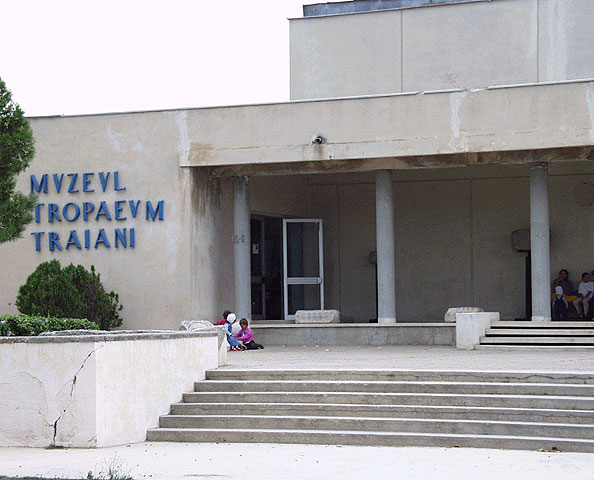
Beside the Tropaeum Traiani monument, the museum at Adamclisi holds the pieces that explain the victory of 102: metopes, weapons, inscriptions, a model of the fortress. Trajan mark…
On 3 June 2006, Cernavodă opened the Axiopolis Museum in an older building, restored. The thread is clear: from the Thinker of Cernavodă (the Hamangia pair, 6th–3rd millennia BC) t…
If you want to understand where Mangalia began, start in the town centre, at the museum opened in 1959. The collection is built around Callatis: the colony of Dorians who came from…
The physician Gheorghe Vintilă, a son of the village of Topalu, collected Romanian painting over a lifetime - from Grigorescu to the interwar artists. The collection, put in the na…
Founded in 1964, the museum in Medgidia first stood in improvised spaces, then moved into a former high school. It bears the name of the painter Lucian Grigorescu, born here. The c…
The building on Tomis Boulevard dates from 1895. It was first a picture gallery, then a county museum. The collection starts from Theodor Aman and Nicolae Grigorescu and reaches th…
Panaghia House, in the centre of Babadag, was part of a Muslim seminary built on the site of a 17th-century madrasa. In the 20th century it had other uses. Since 1970 it has housed…
Between 1893 and 1896 Constanța's first town hall was built, next to the place where the She-Wolf stands today. Since 1975 the building has been a folk art museum. The ceiling of t…
In Vișina, Jurilovca commune, some 69 km from Tulcea, Paraschiva Constantin opened her house in 2006. She has gathered Dobrogea and Bulgarian folk dress, shirts, woven rugs, ninete…
Between 1863 and 1865 the Pasha's Manor, seat of the sanjak, was built at 2 Grigore Antipa Street. It was a prefecture, then an administrative seat; since 1982 it has been the Art…
Between 1924 and 1927, on the Danube bank in Tulcea, the National Bank headquarters was built. After the bank left, the tall halls were given to the museum of ethnography and folk…
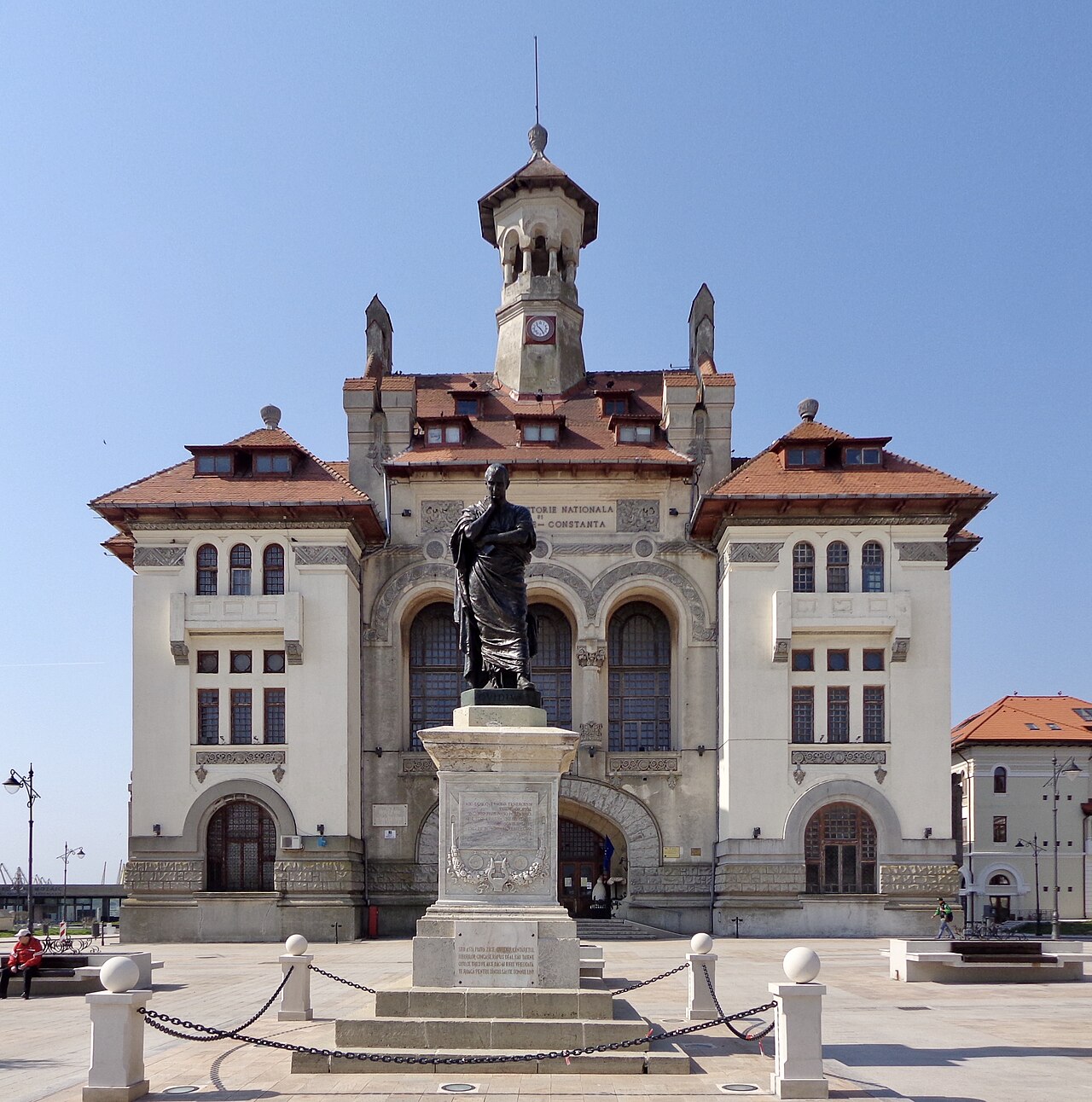
In Ovidiu Square, in the communal palace of 1912–1921, stands the national history and archaeology museum. The collection runs past 430,000 pieces - the second of its kind in the c…
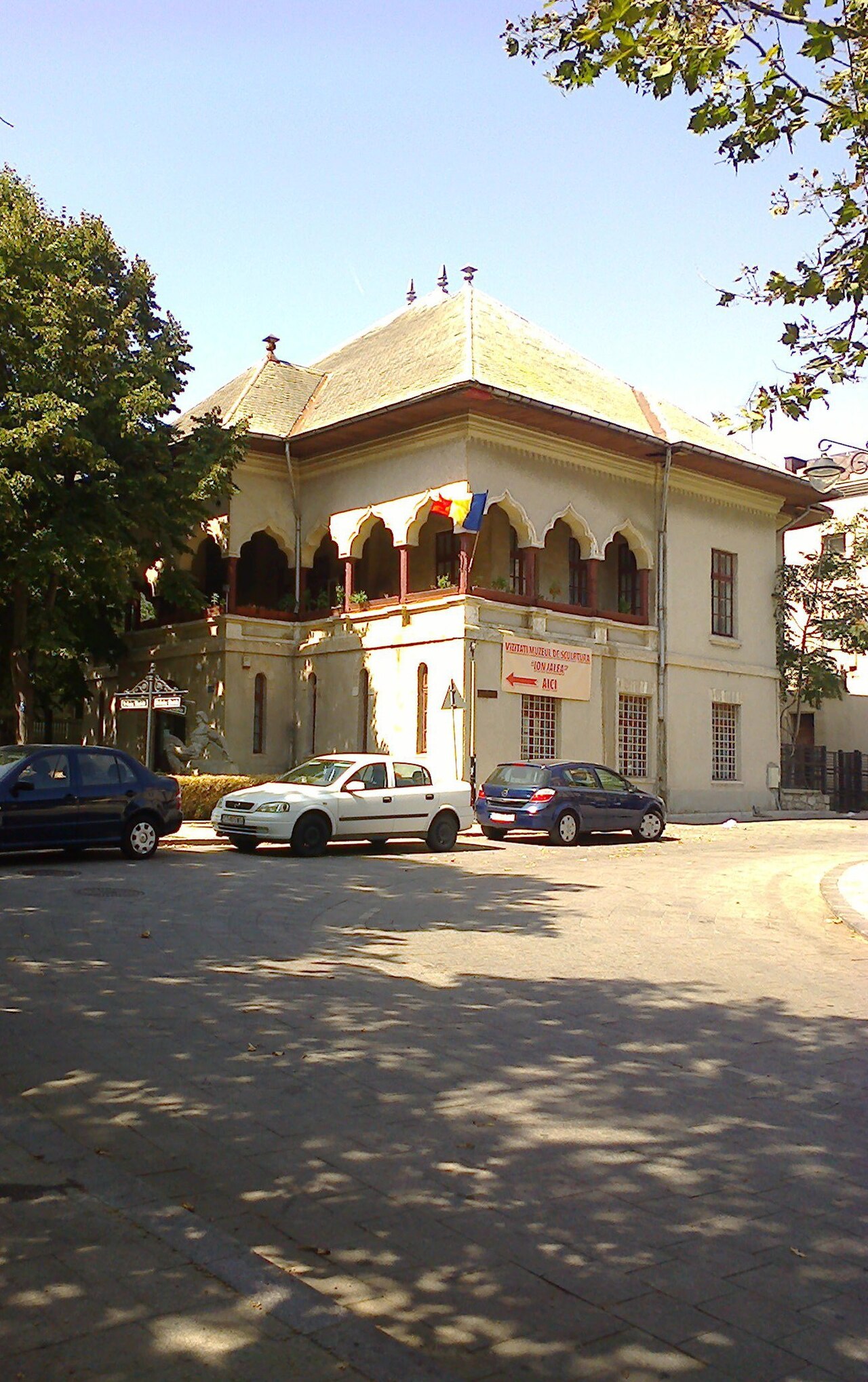
On the seafront, next to the statue of Anghel Saligny, an early-20th-century villa - once a prefect's residence - has housed since 1968 the works of the sculptor Ion Jalea, born in…
On the night of 8–9 July 1854, in the Crimean War, Captain Hyde Parker died at Sulina, in an attack on the batteries at the mouth. The ships Firebrand and Vesuvius had bombarded th…
In 1965, in the former Naval School on the way out toward Vama Veche, commodores Filaret Popescu and Dan Nicolaescu opened a navy section. From 1969 it was recognized nationally. Y…
The Constanța branch of the King Ferdinand I National Military Museum stands on Prelungirea Liliacului, in a district of houses, not in the centre. The exhibition covers the War of…
In the former Naval School building, the museum gathers more than 37,000 pieces: compasses, guns, ship models, uniforms, maps. The thread runs from ancient navigation - including s…
Between 1910 and 1914, on the breakwater at the harbour mouth, a small pavilion was built for Queen Elisabeth, next to the Carol I Lighthouse. From there she watched the sea; the p…
In Târgușor, a stone obelisk remembers the dead of 1916-1918. It is not a capital-city monument: it is a Dobrogea commune that lived the retreat after Turtucaia, when Constantin Te…
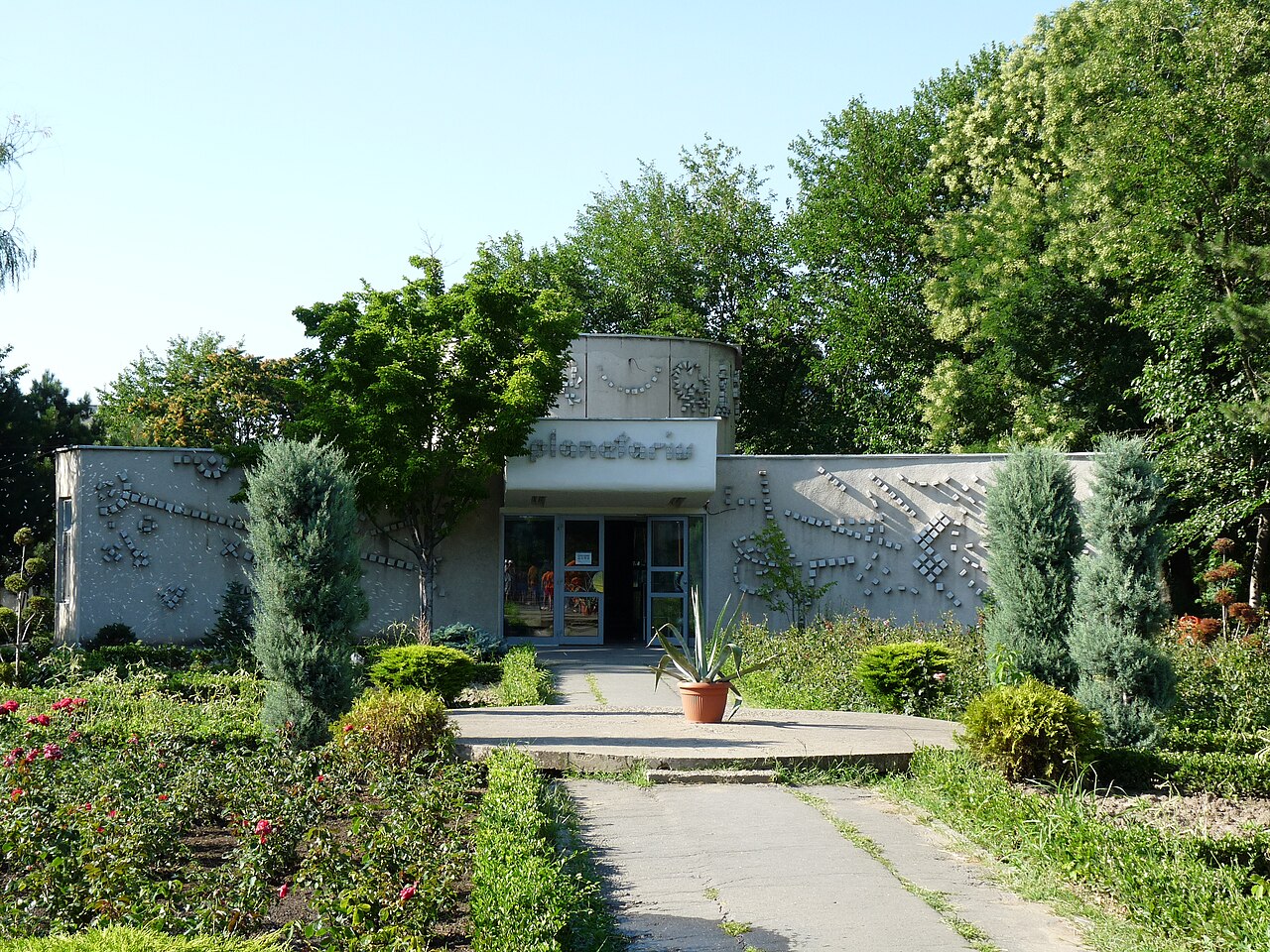
Since 1969, the Natural Sciences Museum Complex has also kept an observatory, built in the years when space flights were daily news. You have a telescope for the Sun and for clear…
The building on the city’s interwar map was, for a time, the Pioneers’ House, then, after 1990, the Children’s Palace. The walls still hold the air of a neighbourhood institution,…
In 1959, along the fourth-century Romano-Byzantine wall - held until the sixth century - a park was laid out with pieces taken from excavations. The restorations of that time gave…
The Sports Hall was thought in the 1970s as a covered arena for handball, basketball, boxing and, when needed, concerts. A few thousand seats, stands around the court, wide accesse…
Site photos: Wikimedia Commons or the newsroom, credit on each sheet. No images from dobrogea150.ro.
Nothing found. Try another term.