Constanța
Ancient Tomis, the largest port on the Black Sea.
Back to the Dobruja pageAbout the town
Constanța, in brief
Constanța is the oldest continuously inhabited city on Romanian territory and the heart of Dobrogea. Founded by Greek colonists from Miletus in the 6th century BC under the name Tomis, the city has witnessed more than 2,500 years of unbroken history: Greeks, Romans, Byzantines, Genoese, Ottomans and Romanians have all left their mark on its streets.
Here the Roman poet Ovidius was exiled, and his statue still watches over Ovidiu Square today, in front of the National History and Archaeology Museum. This is also where the Roman Mosaic Edifice stands, one of the largest ancient commercial complexes in Europe, and the Casino, the Art Nouveau symbol of the Romanian seaside.
Today, Constanța is the country's second economic centre after Bucharest: its port is the largest on the Black Sea, and its universities, industry and tourism draw people from across Romania. It is the city where we look at the sea every day and where we build our applications.
History
Constanța through time
The moments that shaped the town, from the first settlements to today.
The founding of Tomis
Greek colonists from Miletus found the emporium of Tomis, a trading post between the Greek world and the Getic tribes.
Roman rule
Tomis comes under Roman control and soon becomes the metropolis of the province of Moesia Inferior.
The exile of Ovidius
The poet Publius Ovidius Naso spends his final years here and writes "Tristia" and "Epistulae ex Ponto".
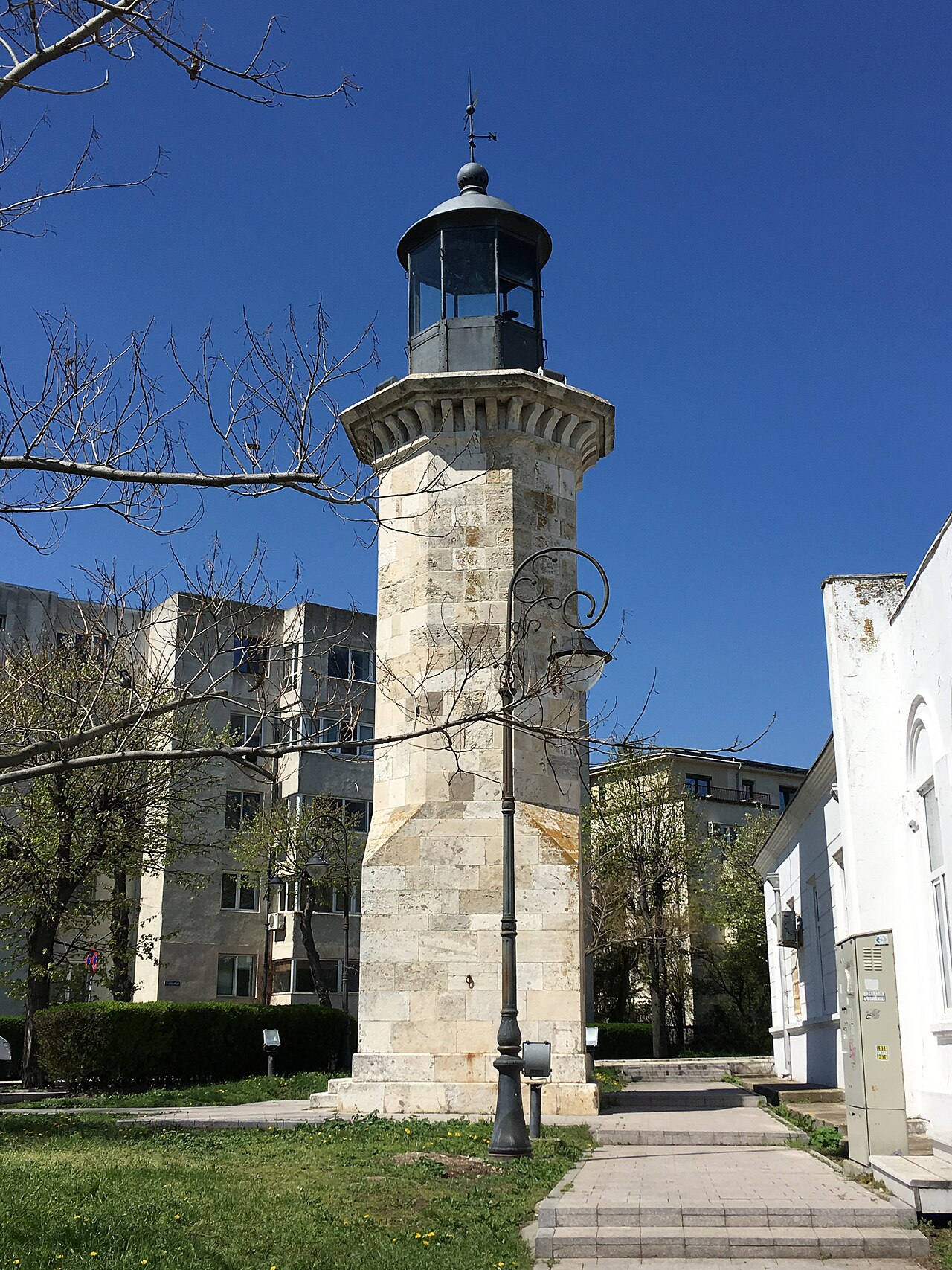
The Genoese and the lighthouse
Genoese merchants revive the port; today's Genoese lighthouse preserves their memory.
Return to Romania
After the War of Independence, Constanța becomes the principal port of modern Romania.
The Casino
The Casino is inaugurated, the Art Nouveau masterpiece on the seafront, the symbol of the city.
To see
What to see in Constanța
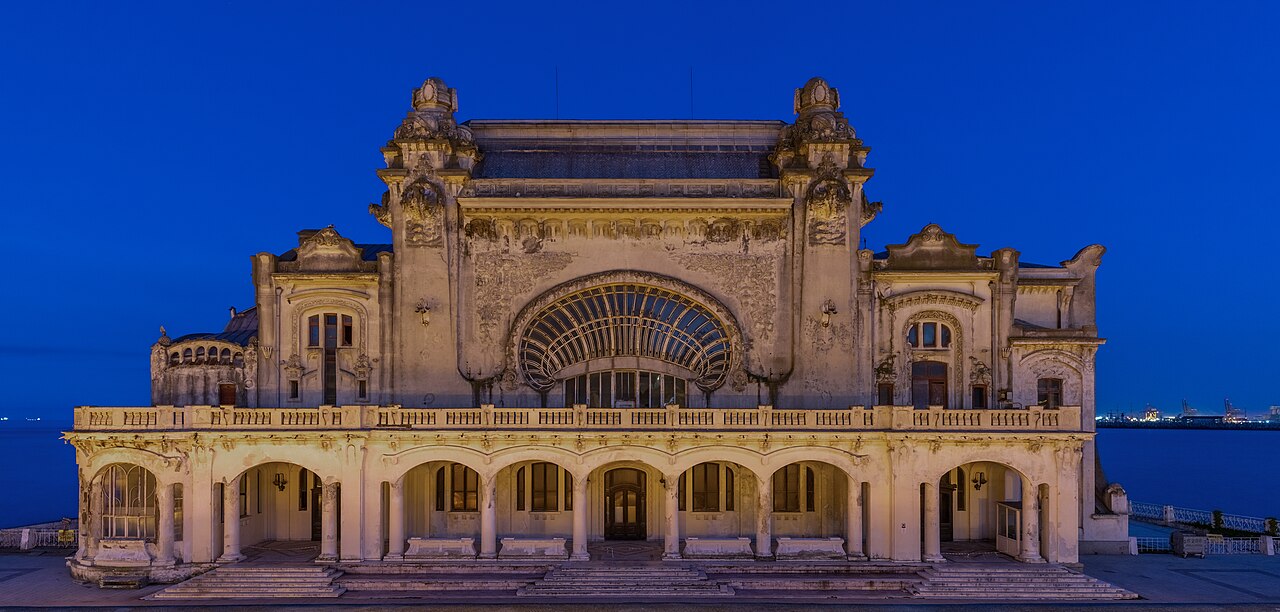
Constanța Casino
The Art Nouveau jewel of the seaside, recently restored, on the Black Sea promenade.
Designed by architect Daniel Renard, the Casino was inaugurated in 1910 and immediately became the symbol of the city: ballrooms, roulette and concerts with a view of the sea. After decades of decay, the major restoration completed in 2024 has restored its former splendour.
The first casino rises on the seafront, a modest wooden structure.
The Art Nouveau building designed by Daniel Renard is inaugurated.
The Casino becomes a house of culture, then a restaurant.
The complete restoration is finished; the building reopens to the public.
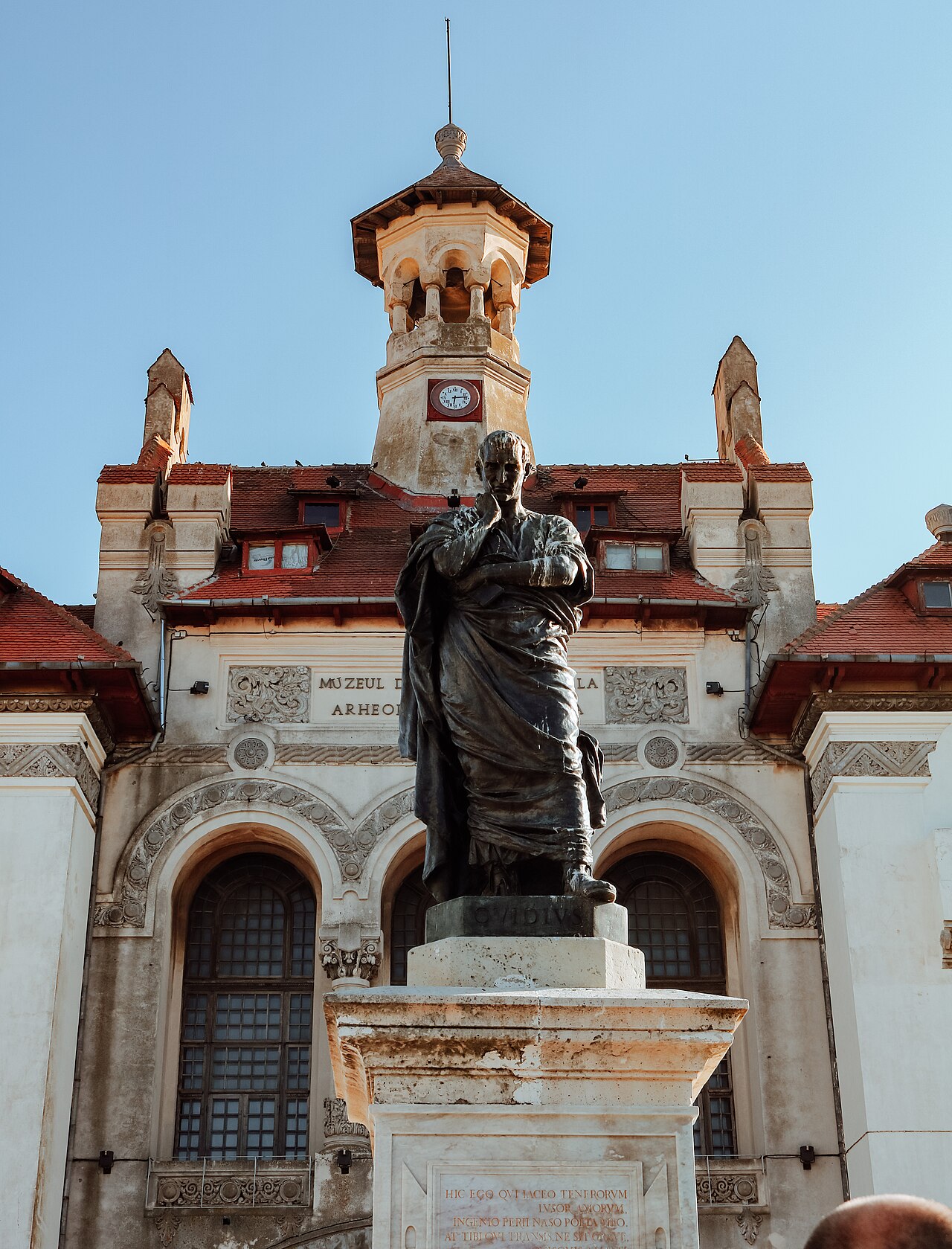
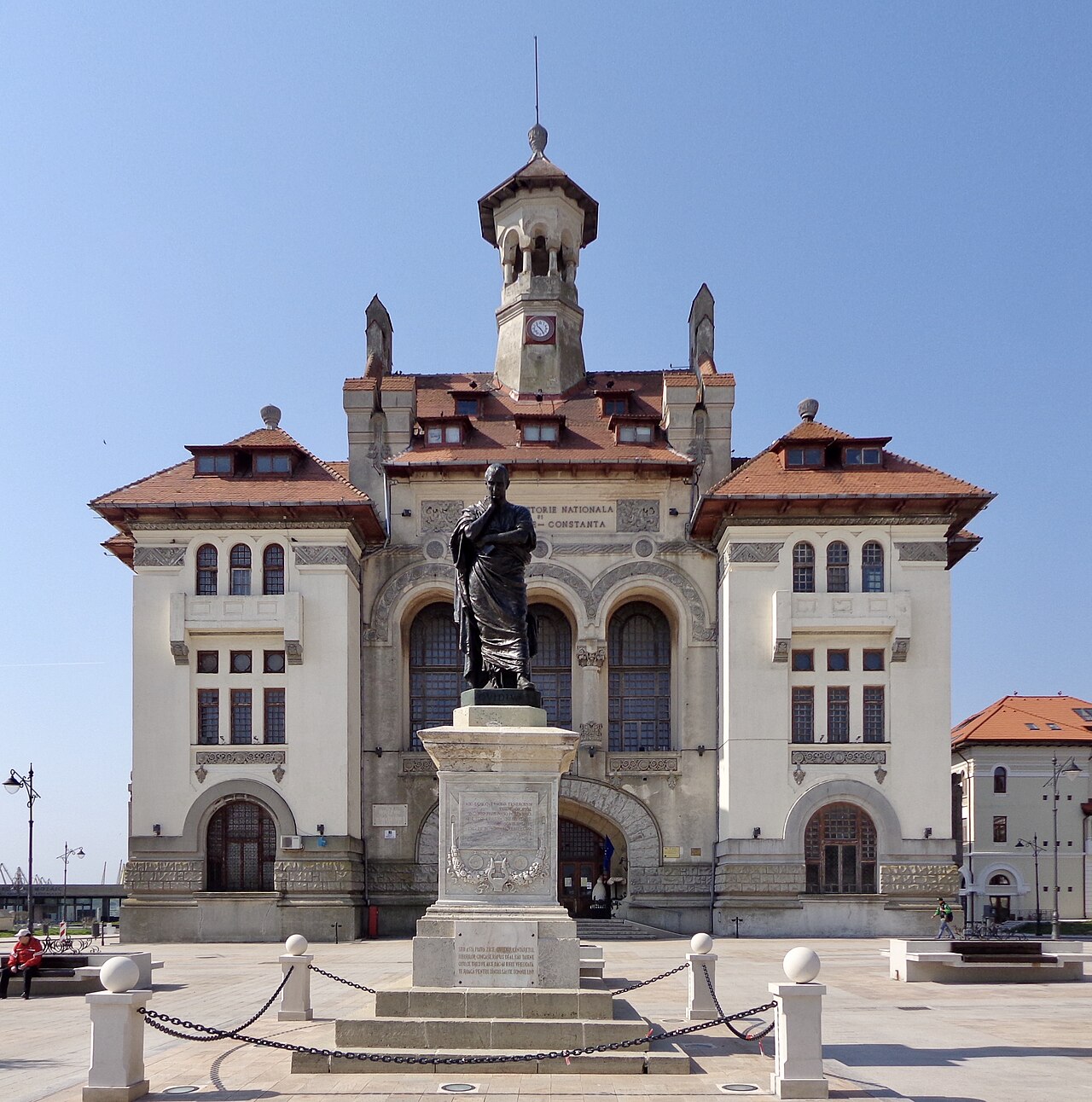
Ovidiu Square and the History Museum
The statue of Ovidius and archaeological collections from Tomis, including the Glykon serpent.
In the middle of the square stands the bronze statue of the poet, cast in 1887 by the Italian sculptor Ettore Ferrari. The National History and Archaeology Museum in the former town hall building houses the fantastic serpent Glykon, a unique sculpture in the world, and the treasures of ancient Tomis.
The statue of Ovidius is unveiled, the work of Ettore Ferrari.
The Communal Palace, the museum's current home, is completed.
During municipal works the treasure with Glykon is discovered, buried in antiquity.
Roman Mosaic Edifice
Over 700 sq m of ancient mosaic, part of a 4th-century Roman harbour complex.
A 4th-century commercial complex spread across three terraces descending towards the ancient port. The polychrome mosaic preserved on roughly 850 sq m is among the largest in Europe: here the merchants of Tomis concluded their deals, among warehouses of amphorae and anchors.
The harbour complex with mosaic is built on three terraces.
The edifice is discovered by chance during construction works.
Protected by a museum building, it can be visited in Ovidiu Square.
Carol I Mosque
Built in 1913 at the wish of King Carol I, with a 47 m minaret and views over the city.
The first monumental reinforced-concrete structure in Romania, gifted by King Carol I to the Muslim community. The huge hand-woven carpet inside was a gift from Sultan Abdul Hamid II. From the top of the 47 m minaret the entire peninsula and port can be seen.
Construction begins, a national first in reinforced concrete.
The mosque is inaugurated in the presence of King Carol I.
An active place of worship and the best vantage point over the old city.
From the database
Places around Constanța
The beach season has closed (after 15 September). On the coast it is autumn/cold: promenade, museums, towns. Not bathing weather.


Map
Landmarks on the map
Pins open the place sheets for Constanța.
The beach season has closed (after 15 September). On the coast it is autumn/cold: promenade, museums, towns. Not bathing weather. Bathing season: 1 June–15 September
Explore the region
Other towns in Dobruja
Software rooted in these places
From the region of Constanța we build four free apps: iShopSync, Gym, iMemory and Daunomania.
See our apps