History
Sari Saltuk Baba Dede, a thirteenth-century dervish, is remembered across the Balkans as a wandering saint. Tradition brings him to Dobrogea around 1263-1278, when the shore was passing from Byzantine hands into those of beyliks. The town took his name: Baba Dağı, the father's mountain.
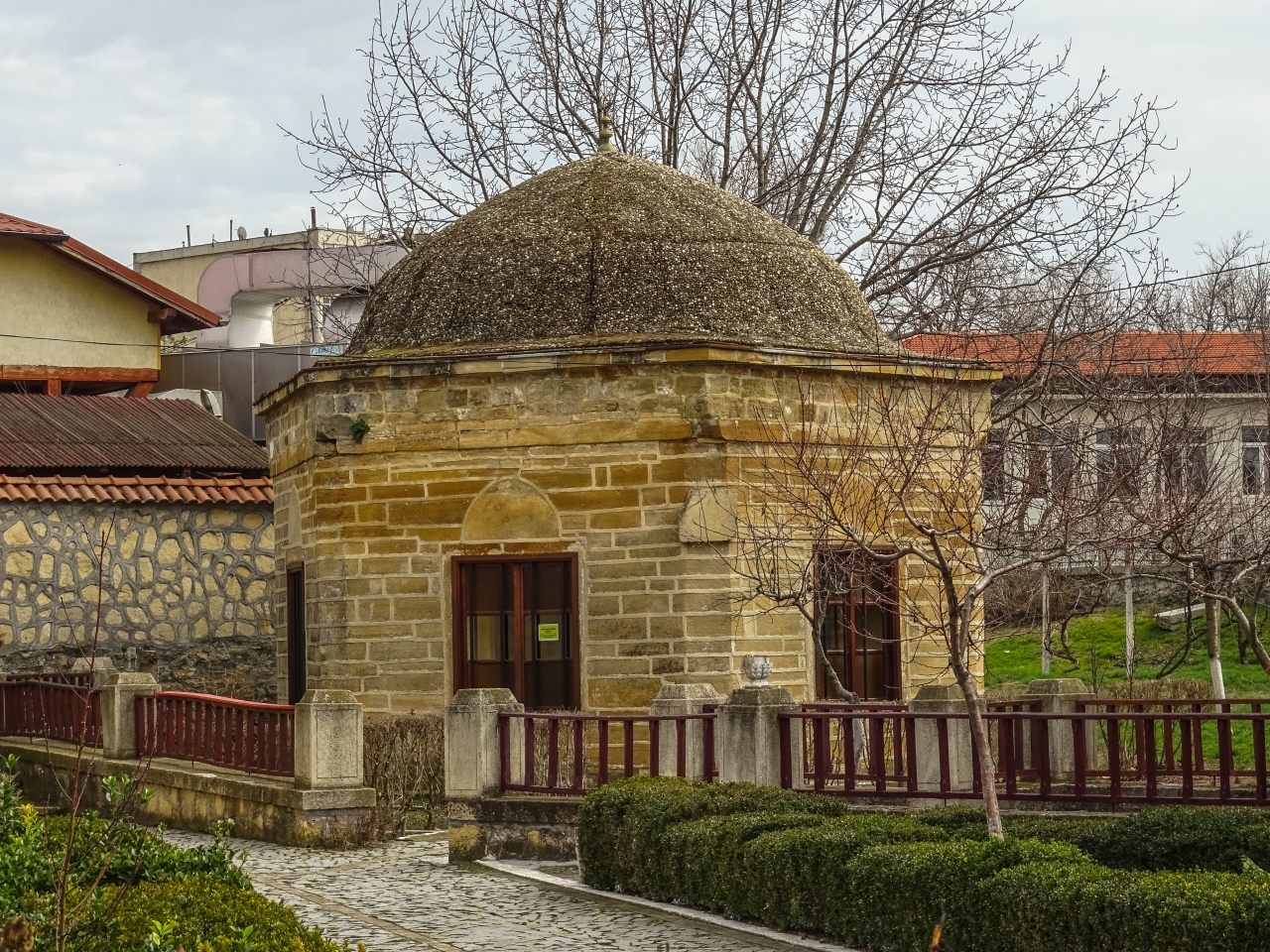
The türbe — the burial chamber — was rebuilt after 1484, in the time of Bayezid II, when the Ottomans consolidated Babadag. Today it is a place of recollection, not a museum with an audio guide. Enter in silence, leave a donation if one is asked, do not photograph people at prayer.
Keep the türbe, the mosque and the fountain in the same hour of walking through the centre. From the cemetery hill you see the whole town.
On the map
The pin marks this site.
Curiosities nearby
01 / 06
Satul Greci din județul Tulcea e „mica Italie" a României: pietrarii veniți din Friuli la 1880 și-au păstrat până azi numele, rețetele și biserica catolică.
02 / 06
Medgidia și Babadag au fost secole la rând centre otomane importante: Babadagul a fost chiar reședința pașalelor Dobrogei în secolul XVII.
03 / 06
Babadag a fost reședința pașalelor Dobrogei în secolul XVII: de aici se administra regiunea otomană.
04 / 06
Evreii dobrogenei au avut sinagogi la Constanța, Tulcea și Babadag: comunitatea a contribuit la dezvoltarea porturilor.
05 / 06
Găgăuzii vorbesc o limbă turcică și sunt creștini ortodocși. În Dobrogea, tradiția îi leagă de zona Babadag.
06 / 06
La Babadag funcționează și azi una dintre cele mai vechi geamii din țară: Ali Gazi Pașa, 1610.
Nearby (25 km)

Community
No approved reviews yet.
No approved comments yet.