History
On a spur above Măcin, the name Arrubium - of Celtic root - appears around the year 100, on two military diplomas. After Dobrogea entered Moesia Inferior, in 46, the place held a riverbank fortification, with ties toward Troesmis and toward Legio V Macedonica.
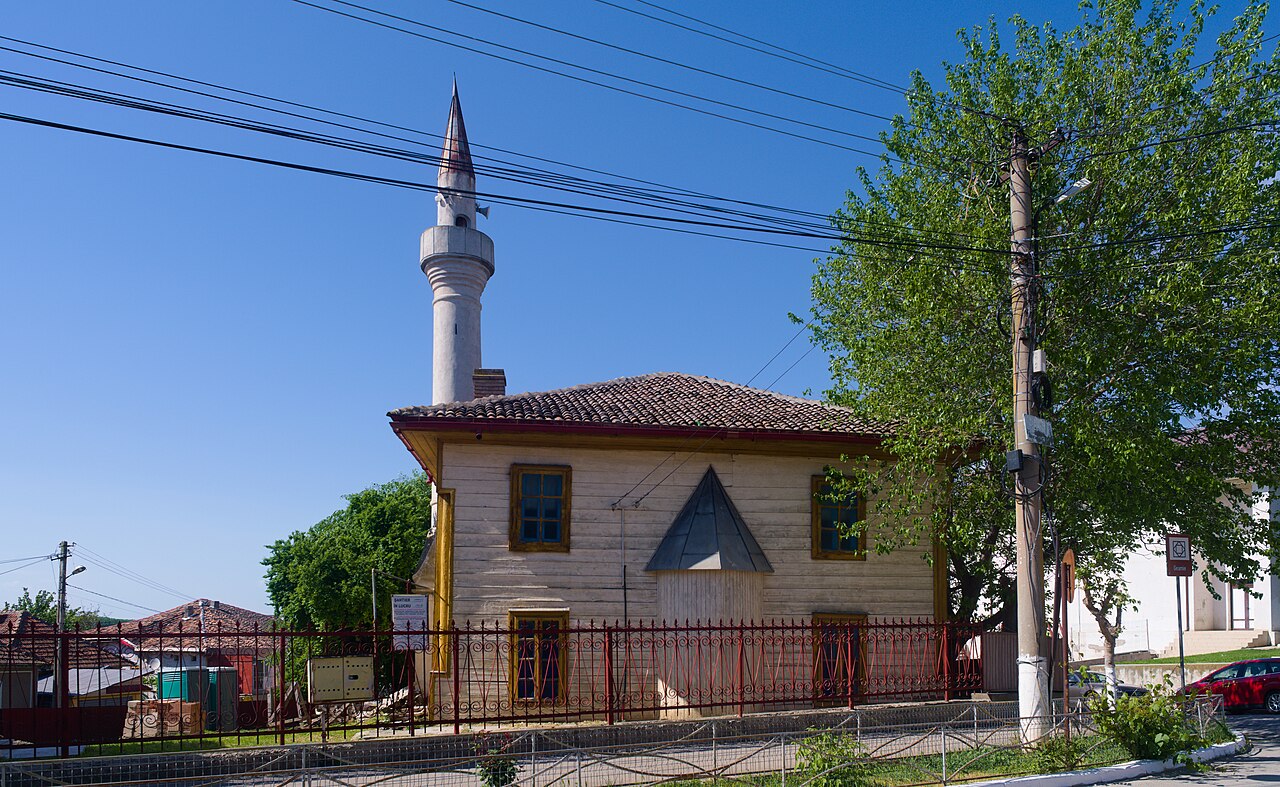
Habitation continued, with gaps, into the seventh century and again in the tenth and eleventh. Today you see low walls, ditches and a wide view toward the Danube. The climb is short from town; avoid summer midday. Then go down to the Mestan Aga Mosque, to hold the same Măcin in two layers: Roman and Ottoman.
On the map
The pin marks this site.
Curiosities nearby
01 / 06
Satul Greci din județul Tulcea e „mica Italie" a României: pietrarii veniți din Friuli la 1880 și-au păstrat până azi numele, rețetele și biserica catolică.
02 / 06
Vârful Țuțuiatu se numea în antichitate „Mons Macin": romanii îl menționau ca reper pe limesul dunărean.
03 / 06
Granitul din Măcin e folosit și azi: piatra „macin" e apreciată pentru durabilitate în construcții.
04 / 06
Evreii dobrogenei au avut sinagogi la Constanța, Tulcea și Babadag: comunitatea a contribuit la dezvoltarea porturilor.
05 / 06
Tulcea e singurul municipiu din România aflat pe malul Dunării, la intrarea în Deltă.
06 / 06
La confluența brațelor, lângă Tulcea, Dunărea poate avea debit de peste 6.000 m³/s primăvara: e unul dintre cele mai mari fluvii din Europa.
Nearby (25 km)
Community
No approved reviews yet.
No approved comments yet.